Tags: Morocco, Mohammef VI, crown prince Moulay El Hassan, hacker Jabaroot, brothers Azaitar, Makhzen, Lalla Salma,
By Christophe Ayad and Frédéric Bobin
Investigation – “The enigma Mohammed VI” (1/6). Twenty-six years after his enthronement in 1999, the Moroccan sovereign remains a complex figure in his relationship to power. While his health raises questions, the prospect of his succession fuels power struggles and backstabbing among elite factions.
These are two mirrored images and, behind them, two narratives that intersect to compose the royal chiaroscuro in which today’s Morocco is reflected. The first scene takes place on June 7, during the Eid al-Adha (“festival of sacrifice”) prayer at the mosque of Tetouan, in the north of the Cherifian kingdom. Dressed in a pastel yellow djellaba and a garnet fez, King Mohammed VI sits on a leather-covered stool. His face betrays fatigue, while those around him praise Allah by prostrating themselves. This image of the 62-year-old sovereign, singled out by his fragile immobility within an assembly in genuflection – an effort he can no longer perform – worsens the already palpable anxiety about his state of health.
More than two weeks later, a radical reversal of the narrative. Social networks circulate a video showing the same Mohammed VI in a swimsuit, astride a jet-ski off Cabo Negro, a seaside resort near Tetouan, surrounded by a swarm of bodyguard boats. The king timidly raises a hand towards compatriots cheering him from the shore. His attitude remains awkward, but a sovereign able to pilot such a craft alone could hardly be considered unwell. Suddenly, the unease born from the previous scene dissipates.
This dual choreography could not better summarize the process of transition Morocco is undergoing. The king is physically weakened – other pictures confirm it, especially when he welcomed Emmanuel Macron to Rabat in late October 2024, thinner, cane in hand – but this weakening would, at this stage, involve nothing dramatic, nothing likely to undermine his serenity at the helm of the kingdom.
Such is the official message, carefully crafted and widely circulated. And to those who persist in being alarmed, it is suggested that the succession is, if not ready, at least in the process of maturing, learning the imperium, and rubbing shoulders with the world, in accordance with age-old traditions. The very ones that guarantee the Alaouite dynasty, the ruling family, a longevity of which the country is so proud, since the 17th century.
The impression of a void
For two years now, the spotlight has increasingly lingered on his eldest son, Moulay (“prince”) Al-Hassan, heir to the throne. This tall 22-year-old is completing his studies in Rabat, where he is notably learning Chinese. It was he who represented his father in late November 2024, during a stopover in Casablanca by Xi Jinping, the Chinese head of state, returning from a G20 summit in Brazil. The face-to-face between the prince and one of the most powerful men on the planet over a tray of tea and sweets marked a turning point.
“Moulay [Al-]Hassan in the big league,” headlined Maroc Hebdo magazine at the time, ready to see in this sequence the “official baptism by fire of a monarch in the making.” The launch of the young prince into orbit is sketched out according to tradition: on July 31, he was officially named major colonel, the first step before the title – expected soon – of coordinator of the offices and services of the general staff of the royal armed forces. Precisely at the age when his father had inherited all these titles and ranks in 1985.
But international exposure is another matter. For Prince Hassan, encounters with heads of state stopped with the exchange with Xi. No other high-profile meeting has followed. At the reopening ceremony of Notre-Dame in Paris, in late 2024, Mohammed VI was replaced by his brother, Moulay Rachid. In April, for Pope Francis’ funeral, he sent his prime minister, Aziz Akhannouch, to Rome. In June, at the UN Ocean Conference organized in Nice, it was one of his sisters, Princess Lalla Hasnaa, who represented Morocco.
“There is a meticulously staged performance to avoid sending signals that could be interpreted as a passing of the torch between Mohammed VI and his son Hassan,” explains a Western diplomat posted in Rabat. “In any case, the time has not come. One must not get ahead of the music. The transition has not begun, even though it is in everyone’s minds.” And that is indeed the difficulty for a Morocco facing immense socio-economic challenges – rural exodus accelerated by water stress, youth unemployment, social polarization, etc. – which require proactive governance.
However “meticulous” it may be, the official “staging” struggles to dispel the political fog surrounding this singular transition, acknowledged without being admitted or assumed. “The king will not abdicate despite his illness,” claims a fine connoisseur of the workings of the makhzen, an untranslatable word designating the system of power in Morocco and, by extension, the royal palace.
Mohammed VI is therefore very much in command, and it must be known. Official communiqués pile up on duties carried out, according to the ritual formula, by “His Majesty Mohammed VI, Amir Al-Mouminine [‘Commander of the Faithful’], may God assist and glorify him”: chairing councils of ministers, receiving walis (governors) or ambassadors, messages of condolences to the families of illustrious deceased or of congratulations on national holidays, royal pardons of convicts during Eid, etc. It is hard not to suspect, behind this frenzy of protocol, a desire to dispel the impression of a void at the top born of the king’s repeated absences in recent years.
The withdrawal was not necessarily linked to his health. His long recreational escapes to Paris, Dubai, the Seychelles, Zanzibar, or Gabon mostly testified to a detachment, if not weariness, towards the exercise of responsibilities. Even his most loyal advisers eventually became concerned.
A closeness that makes people cough
This distant relationship to the throne is an old story… Looking closely, it goes back to the 1980s-1990s, in other words to the time of his first princely steps, in the shadow of his father, Hassan II (1929-1999). “Mohammed VI. The prince who did not want to be king”: Spanish journalist Ferran Sales Aige thus titled the biography (not translated) he devoted to him in 2009.
One can date to spring 2023 the orchestration of the “return of the king,” according to the formula of another journalist, Moroccan this time, Omar Brouksy. This timing was no coincidence. In April of that year, a long investigation by The Economist, entitled “The mystery of Morocco’s missing king,” caused a shockwave in the circles of power.
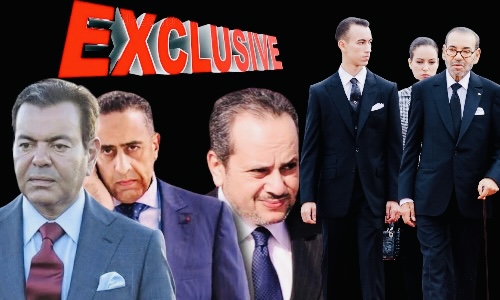
The article by the British weekly detailed the growing influence exerted over the sovereign by Abou Bakr Azaitar, a mixed martial arts (MMA) champion whom he met in 2018, during a royal palace reception honoring his achievements in international rings. “It was like love at first sight,” sums up a member of the close circle. The monarch immediately invited the champion to join him for Friday’s weekly prayer.
A personal relationship developed between the sovereign and the German-Moroccan boxer, from the Rifian diaspora of Cologne, soon joined by his brother Ottman, also an MMA champion, as well as Abou Bakr’s twin, Omar, the manager of the other two, along with their father, an imam of a mosque in Germany, who would soon impose himself as the muezzin of the royal palace mosque.
“With these new friends, the king feels more relaxed,” adds a source well connected to the monarchy. “He needed to turn the page after his divorce in 2018. The Azaitars bring him lightness. With them, he is not constantly brought back to the worries and demands of his office. And besides, they got him back into sports, which did him good.”
Such closeness inevitably caused an uproar. The Moroccan elite was outraged by the intrusion of this flashy brotherhood with a heavy criminal record in Germany, according to the press there. The Azaitar brothers posed on social networks alongside Mohammed VI, or under his portrait, while showing off their swollen biceps, luxury watches, and flashy cars (Ferrari, Bentley, Rolls-Royce, etc.), gifts from their royal friend.
Mohammed VI even made available to them a palace belonging to the royal domain, in Tangier, so that they could set up a sports club there.
The worst, in the eyes of the old guard, is that they interfered with the functioning of power, sometimes controlling access to the king. Lately, it was Omar Azaitar who answered calls destined for the sovereign and decided whether to disturb him depending on his fatigue and availability. Moulay Rachid and Moulay Ismaïl, the monarch’s brother and first cousin, thus found themselves interrupted, during an interview with Mohammed VI, by one of the Azaitar brothers, who bluntly told them that “His Majesty” was tired and needed to withdraw. A crime of “lèse-prince.”
An anecdote circulates among those familiar with the palace. One day, Abou Bakr Azaitar, who was walking his small dog in a park in Rabat, lost it. The animal was nowhere to be found. With royal assent, he alerted Abdellatif Hammouchi, the highly media-savvy head of the police and director general of national security and domestic intelligence (DGSN-DGST), ordering him to mobilize his men to find the dog. Embarrassed, the officer had to comply.
That was all it took for the guardians of the makhzen, through the online newspaper Hespress, to sound the alarm against the looming danger. The “damage” caused by these “sordid characters” in full “ascent to the heights of power” were “time bombs that will end up exploding in their faces,” it was written in an article dated July 2021. “There cannot be other princes than those who are members of the royal family,” added Hespress. “Abou [Bakr] Azaitar should read the story of Rasputin.”
The warnings carried little weight as long as they came from media outlets such as Hespress or Barlamane, linked to Morocco’s deep state, worried about seeing these “Rasputins” embed themselves next to the monarch. Mohammed VI seemed to ignore the alarm, letting his new friends freely flaunt their royal proximity. The Azaitar brothers, for their part, felt sufficiently supported by him to file defamation suits against overly critical newspapers, including Barlamane, close to the police. The king’s prosecutor accepted to investigate. Since then, no one knows what became of the complaint, but the attacks ceased.
Curbing the drift
But The Economist’s article, in 2023, gave international resonance to the malaise. Its author, Nicolas Pelham, had been a permanent correspondent in Rabat at the turn of the 2000s and had therefore kept sources within the Moroccan elite. It is no coincidence that some of his contacts drew his attention to the king’s new entourage as if to suggest an investigation topic.
Exposed to the world, the affair from then on changed in nature. The monarchy’s reputation abroad was at stake. It was urgent to curb the drift. Hence the “return of the king” that spring, or at least the redoubled staging of his activities, accentuated after the deadly earthquake of September 2023, during which the sovereign was, as often, abroad, and to which he had been slow to react.
Even if Mohammed VI keeps them in his entourage, the Azaitar brothers have been gradually erased from social networks. New friends have joined the cheerful band. Youssef Kaddour, a colossus and also an MMA champion, is the king’s new favorite. A native of the Spanish enclave of Melilla, he follows the monarch wherever he goes. With unfailing discretion, he has never published anything on social networks, and his family displays no visible signs of enrichment. He was seen earlier this year in a cart carrying the monarch, in a tracksuit with his arm in a sling, in a shopping mall in Abu Dhabi.
To combat rumors and bad publicity, the promotion of family scenes has provided a counter-narrative, that of a united Alaouite lineage on the march. Alongside Prince Moulay Al-Hassan, whose rise is calibrated to the closest degree, his sister, 18-year-old Lalla Khadija, is gradually emerging. The appearance of the graceful young woman at the royal dinner offered in honor of Emmanuel Macron, in late October 2024, in Rabat, did not go unnoticed.
Three weeks later, she was again seen smiling, on an outing with her father and brother, on the Left Bank in Paris. The stroll was captured by Point de Vue, the royal news magazine, whose photos exude harmony: Mohammed VI in “cool” attire – jeans adorned with patches and sneakers – delicately adjusts a scarf on Lalla Khadija’s shoulder, while, in another scene, Moulay Al-Hassan takes a selfie of the trio. The “paparazzade” is clearly organized.
The idyllic family portrait nevertheless includes one great absentee: the mother of the two children, the king’s ex-wife. Lalla Salma had, in fact, disappeared from official imagery since the acrimonious divorce in 2018. No one knows exactly why the couple separated at the time, but, in reality, it no longer worked. The royal spouse apparently reproached her husband for his lack of interest in their children’s education.
For their part, the king’s three sisters, Meryem, Asma, and Hasnaa, did not hold the former royal spouse in their hearts — a commoner from Fez, an engineering graduate, intelligent and strong-willed. Since the divorce, Lalla Salma has been required to keep a low profile in Morocco, as if she no longer existed. She has no public activity. Her first public appearance was alongside her son, Prince Al-Hassan, in the summer of 2024, in the streets of the Greek island of Mykonos.
Power struggles and backstabbing
Lalla Salma is the great “unspoken” of the current transition, a source of embarrassment. Very close to the crown prince, who lives with her in Rabat, she will inevitably be brought back into favor after her son’s enthronement. Her return is bound to shift the balance within the royal circle, as she was mistreated – notably by her sisters-in-law – during the separation. The shockwave may even spread far beyond, to all those who participated in the smear campaigns orchestrated against her.
In Rabat as in Casablanca, it is whispered that the future king will not spare the architects or accomplices of the cabal. Speculation is admittedly premature – at this stage nothing is known of his intentions – but it follows a historical logic, that of the inevitable reshaping of the entourage inherent to a succession. In 1999, Mohammed VI himself, upon ascending the throne, got rid of some of his father Hassan II’s loyalists, beginning with the all-powerful interior minister Driss Basri.
Hence the feverishness already gripping factions of the Moroccan elite, where some fear for their acquired positions, while others seek to expand them. Tensions, power struggles, and backstabbing weigh down the general atmosphere. “A suffocating end of reign,” laments a Casablanca businessman.
One of the most intriguing signs of the prevailing nervousness is undoubtedly the campaign launched against Mostafa Terrab, the head of the OCP (Office Chérifien des Phosphates), a public giant with international reach. In a scathing article published in June, the online newspaper Le360, effectively controlled by Mounir Majidi, Mohammed VI’s private secretary and manager of royal assets, castigated Terrab’s “hubris,” accusing him of having turned the OCP into his “toy” through a “worrying drift.”
What should be understood from this attack emanating from a loyalist of the king against a business eminence who, incidentally, sponsors the crown prince’s studies through the Rabat branch of the Mohammed VI Polytechnic University, founded by OCP? Are certain interests fearing that this academic connection will multiply Mostafa Terrab’s influence at the time of succession and make him a potential power to be countered now? Once again, one is left with hypotheses. Whatever the case, the incident reveals a mood of the times, an electric atmosphere during this pivotal period when lines of force are being recomposed.
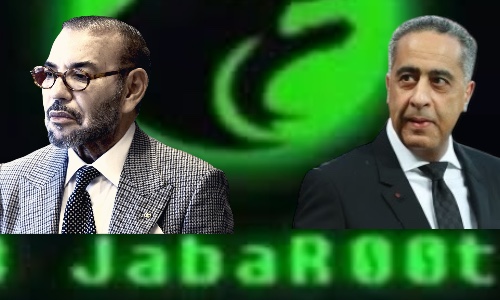
This climate was further poisoned in the spring by a very troubling series of cyberattacks targeting public organizations (Social Security, Land Registry, etc.), revealing a mass of personal information on the salaries or real estate transactions of hundreds of thousands of Moroccan citizens. This large-scale hacking was claimed by an enigmatic group, JabaRoot DZ, whose Algerian reference in its name (“DZ”) does not exhaust the mystery, as some observers do not rule out internal manipulation within Morocco.
Whatever its origin, this disclosure of compromising data for senior officials of the kingdom – such as Mounir Majidi, Yassine Mansouri (head of the General Directorate of Studies and Documentation, foreign intelligence) or the foreign minister, Nasser Bourita – unsettled minds in the country by casting a harsh light on the colossal privileges of the political elite.
The latest series of hacking by Jabaroot (which now signs without “DZ”) is all the more worrying. The hacker revealed in early August the extent of the real estate holdings of one Mohamed Raji, a DGST heavyweight and expert in acquiring spyware. Raji had been recalled from retirement to serve alongside the king in the wake of the turbulence caused by the Azaitar brothers affair.
Playing the role of interface between the palace and security agencies, he was supposed to lock down, for the sovereign’s benefit, the transmission of sensitive information from surveillance. The revelations about him are therefore all the more disconcerting. They clearly stem from internal leaks and already instill the poison of doubt and suspicion at the heart of the apparatus.
Business gluttony
Unbridled business dealings in the economic sphere add to the general turmoil. In recent years, Morocco has seen the accelerated rise of oligarchs determined to profit from a rentier and crony capitalism. Aziz Akhannouch, both head of government and the country’s wealthiest man, is its emblematic figure: his group, Akwa (fuel distribution, real estate, media, renewable energies…), obtained in 2024 the Casablanca desalination project under conditions denounced by critics as a “conflict of interest,” which he denies.
It must be said that the example comes from the top, with the royal holding Siger, whose tentacles extend from banking to mobile telephony, via agriculture and renewable energies. A major partnership (worth around €12 billion) sealed in May between the Emirati giant TAQA and Moroccan entities – among them Nareva, the energy subsidiary of the royal holding – has just given a nearly dizzying dimension to this blending of roles.
At a time when the royal fortune continues to grow and consolidate, the imagery of the early reign, that of a “king of the poor” attentive to the grievances of ordinary people, seems far away.
Yet Mohammed VI’s business gluttony hardly tarnishes his popularity among his compatriots. This, as far as can be judged, remains intact. Rumors about his health even earn him an extra dose of compassion.
Rumors about his health even earn him an extra dose of compassion. While discontent simmers in Morocco over social inequalities and corruption – one only needs to listen to the chants of football supporters in stadiums – it spares the king, in accordance with the eternal article of faith that the caliph is virtuous and the viziers are corrupt.
Bumping against the sacrality of the monarch’s person, untouchable despite his shortcomings, popular resentment is deflected onto Aziz Akhannouch, the ideal lightning rod. The press steered by the palace even relishes orchestrating the diversion. One only needs to read the well-known Le360, a barometer of the strategies to protect the royal sanctuary, to find scathing articles worthy of an opposition press, such as the one on June 10 lamenting a “state apparatus taken hostage by an absentee executive” and a “public governance reduced to an empty shell.”
Yet the prime minister is a longtime protégé of Mohammed VI, who entrusted him with the task of ousting the Islamists of the Justice and Development Party from power in the 2021 legislative elections, a mission he accomplished successfully after a campaign awash with money. And despite the “empty shell” of his governance, here he is campaigning again for the 2026 election with royal approval.
The ongoing transition exacerbates this cynicism of four-way billiard games. It would, however, be risky to detect in it the beginnings of a future regime crisis. Little murders among friends do not make a revolution. The population’s attachment to the monarchy as an institution and the rise of an uninhibited nationalism provide powerful safeguards.
The palace plays this masterfully, by showcasing the gains of its diplomacy on the “Moroccanness” of Western Sahara against rival Algeria, used as a foil. Let us add that the prospect of the 2030 FIFA World Cup, co-hosted with Spain and Portugal, offers a positive horizon. But beyond that? Once the party lights are out, Morocco may find itself facing its old demons again, those of socio-regional fractures and a conquering business oligarchy inclined to insidiously subvert the sovereign state. Then, the shadows and lights of Mohammed VI’s reign – a half-hearted modernizer and unfinished reformer – will stand out more clearly on the tables of history.