#Algeria #Europe #energy_crisis #Iran #war #gaz #LNG #petrol_price
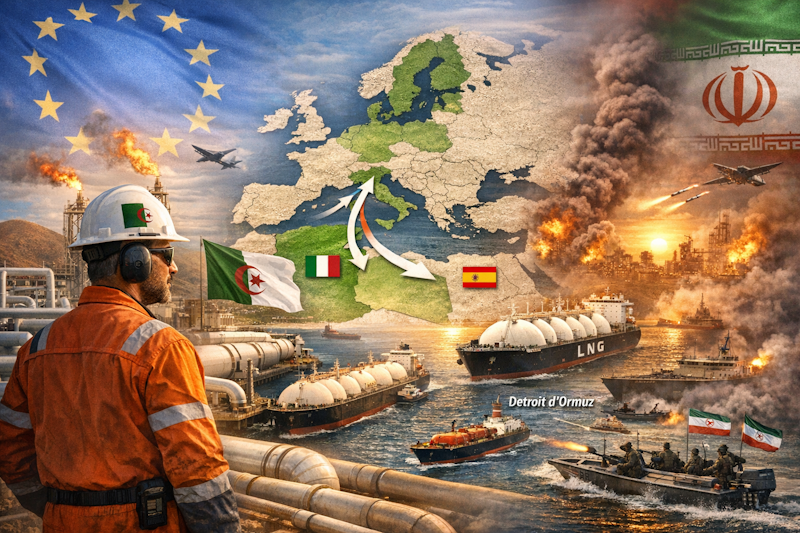
Escalating tensions in the Middle East have disrupted global energy flows after Iran blocked the Strait of Hormuz, a critical route for oil and gas shipments. The move followed US and Israeli strikes on Iran and retaliatory actions targeting key infrastructure, including Qatar’s Ras Laffan facility, significantly reducing global LNG supply.
The crisis has driven sharp increases in energy prices and heightened fears of shortages in Europe, where gas reserves are already lower than usual. As countries scramble to secure alternative supplies, Algeria has emerged as a key partner due to its proximity and established pipeline connections to Europe.
Already supplying around 13–14% of the EU’s gas, Algeria is increasing exports, with flows rising in early 2026 and ongoing talks with countries like Italy and Spain to boost deliveries further. However, experts warn that Algeria can only partially offset the loss of Qatari gas. Production limits, rising domestic demand, and aging fields constrain its capacity, with potential increases estimated at 4–8 billion cubic metres—insufficient to fully cover the shortfall.
While Algeria is acting as a “safety valve” for Europe, the continent will need to continue diversifying its energy sources, including imports from the United States, Norway, and Azerbaijan, to avoid a deeper energy crisis.
With Euronews