Tags : Western Sahara, Morocco, Mauritania, Algeria,
Interagency intelligence memorandum
Recent Developments
In August 1979 Morocco unilaterally annexed the southern portion of Western Sahara—the portion formerly claimed by Mauritania—and strengthened its military presence in the area. These actions by Morocco followed Mauritania’s signature on 5 August of a separate peace with the Algerian-backed Polisario Front and the vote against Morocco at the African Unity summit in mid-July.
These political developments left the dispute more than ever a direct conflict between the two regional powers, Algeria and Morocco. The events all cut Morocco’s diplomatic position, thus increasing the pressure on King Hassan to abandon his policy of temporizing in favor of more risky political or military strategies aimed at resolving the nearly four-year-old conflict.
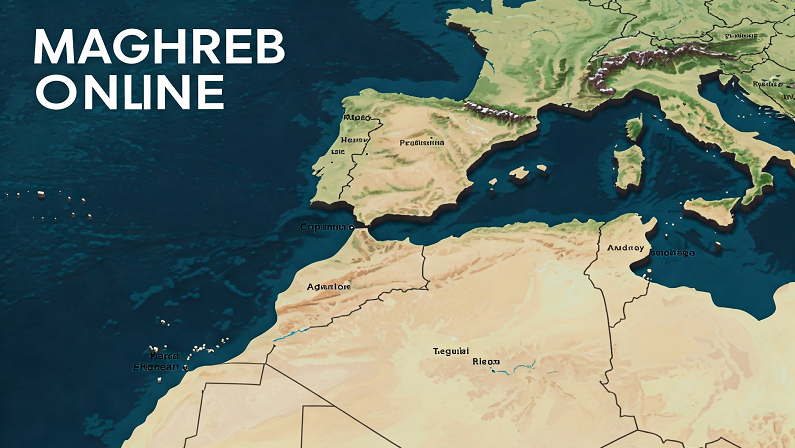
Many Moroccans now believe that the Saharan war is responsible for the country’s domestic difficulties—inflation, heavy taxes, rising unemployment, and inadequate social spending—and a growing number are said to favor a confrontation with Algeria as a way to bring all parties to the negotiating table. Only King Hassan would make such a decision, and he is unlikely to be swayed by popular sentiment. Consideration by Moroccans of this relatively desperate strategy reflects their growing awareness that the tide in the Sahara has turned against Morocco as the military successes and political strength of the Polisario have mounted. The Moroccans—who have roughly half of their more than 100,000-man military force dedicated to the Saharan problem—early this year withdrew the bulk of their forces to a defensive perimeter in the northwest of Western Sahara (see accompanying map), with the result that the Polisario Front—a total force estimated at 10,000 to 12,000—operates freely in large areas of the sparsely populated territory. The guerrillas in 1979 began for the first time to stage concentrated attacks on towns inside Morocco, and the frequency and intensity of these have mounted (1)
Morocco formally claimed sovereignty over the northern part of Western Sahara in April 1976…
Near-Term Possibilities
Several potential developments (or lack of developments) unwelcome to the United States are possible over the next six months:
— As part of Hassan’s move to claim the former Mauritanian southern area (so far, Moroccan troops are believed to be present only in Dakhla, the provincial capital, and in one or two other population centers), Morocco may introduce a much larger military force into the sector. A large force would be able to secure the few towns and establish bases but—without a fundamental change in how they operate—the Moroccans would not be able to ensure effective Moroccan control over most of the area or defeat the guerrillas.
The Moroccan occupation of the southern portion of Western Sahara has proved popular initially among Moroccans because it caters to Moroccan nationalism. However, if Morocco is unable quickly to gain the initiative—which seems unlikely—it will tax military resources and undermine military morale. It will also weaken Morocco’s diplomatic and political position, because it gives the impression of Moroccan territorial hegemony and disregard for the call for self-determination. Hassan may hope to use his occupation of the territory as a bargaining chip during any negotiations, but the Polisario has repeatedly insisted it must control the entire Western Sahara.
— Hassan could provoke a military incident along Morocco’s border with Algeria or initiate guerrilla-style operations inside Algeria itself—against Polisario and Algerian targets—as a way of forcing negotiations. Morocco has reportedly been training for several months a small force of Saharans to stage attacks on Algerian installations and personnel in reprisal for Polisario raids. Hassan would presumably hope that third-party mediation would follow such clashes and provide him a favorable outcome.
would risk full-scale war with Algeria. We have at this time no evidence that Hassan has made preparations for a military incident, that he seeks wider hostilities with Algeria, or even that he is preparing to implement his oft-repeated threats of hot pursuit of the guerrillas into Algeria. Hassan has in fact recently adopted a conciliatory posture toward Algeria, even promising not to stage attacks on Polisario sanctuaries inside Algeria.
Increased Moroccan pressures against Mauritania are likely. The Moroccans have signaled that they would like to see the Polisario resolve its claims at the expense of Mauritania. Moroccan efforts to encourage pro-Moroccan elements to destabilize the regime in Nouakchott may be under way, and it seems likely that the Algerians and perhaps Libyans will take countermeasures to support the present Mauritanian regime. Both the Polisario and the Moroccans seem likely to use Mauritanian territory in their ongoing struggle, and Morocco especially may decide to invoke its long-declared « right of pursuit » by making incursions into Mauritania.
The Polisario Front is likely to mount progressively more frequent assaults on Moroccan forces inside Morocco, as the guerrillas, bolstered by the conviction that time and events are on their side and having made peace with Mauritania, concentrate on the Moroccan target. Although designed primarily to keep the military initiative, the Polisario attacks will also further undermine Moroccan military morale and probably force Hassan in time to abandon his present conciliation of Algeria.
A negotiated settlement is very unlikely unless Hassan makes major concessions and until Algeria becomes more receptive than heretofore in searching for areas of compromise. There is no evidence that the Polisario or Algeria will soften their fundamental demands, and it is uncertain just how far Hassan will go in offering concessions. He has thus far limited his public moves to bilateral gestures toward Algeria. The King’s present unwillingness to make substantial concessions is based primarily on his calculation that such a move could fatally undermine his authority at home; our assessment is that these risks are
Hassan may continue to seek stoppages solution despite his seeming ability to skillfully and between his own will (Adrar) and adversaries that might buy him a significant amount of time-vigorous military operations or a temporary UN peace force. Only if circumstances become much graver by the military occupation of the southern zone past, Hassan’s temporizing will fuel domestic criticism and increase the unlikeli-hood of a peaceful solution, including a loss of Moroccan continue. A backlash will be especially likely with the normal increase in student and labor unrest as the UN fails with the diplomatic initiative, perhaps at the Organization and UN General Assembly meetings.
—A military coup is possible in Morocco. A number of Moroccan military officers at junior and mid-level levels already are reported to be upset with Khalid, who blamed them for serious stoppages, and to favor abandoning the war even if it means ceding Morocco’s claim to the Polisario. On the other hand, some « hawks » at all levels of the military who favor a strong stand against Algeria are also unhappy as a result of the restraints Hassan has placed on the military-including restrictions to Morocco’s own border-against coup attempts such as occurred in the early 1970s. These restraints imposed by the King have in the form of a strong, independent armed force that militates against operational flexibility and individual initiative.
—Libya almost certainly will continue its recent efforts to expand its limited role in the dispute. Although Qadhafi’s principal motivation is the principal backer of the Polisario, its involvement is likely to continue to increase the flow of arms to the guerrillas, influence their relations to negotiate, and further drive a wedge between pro-Algerian and pro-Libyan elements of the group’s leadership.
Political Problems for the United States
Recent developments in the Western Sahara conflict and most foreseeable subsequent scenarios virtually ensure increased difficulty for the US Government in pursuing its relations with all parties to the dis-pute. The most immediate difficulty for the United States is likely to arise in protecting its relations with Morocco as the King begins to seek support/arms for his domestic/military problems. The provisions for additional US arms to Habat will become more impor-tant to the Moroccans as they experience escalated guerrilla attacks in their position in Western Sahara and in Morocco proper. The King is likely to be anxious about possible conflict with Algeria. This issue will transcend the purely Saharan context and become for him important as an issue impacting US support. If support is United States will not see. We see no evidence that either the provision or the withholding of US arms will be the determining factor in the conflict. However, both options will cause Hassan to negotiate to seek a military solution to the conflict? Prevention of US willingness to support Hassan, and to strengthen his position internally, al-though he has long been critical of this government, not sustain the King indefinitely if the war were on. The question of third-country perceptions of US sup-port also is likely to have a likely. While some African countries would be overtly pro-Moroccan, military support, the Saudis and the French, as well as the Senegalese (overtly) have strongly urged Washington to increase arms to Hassan.
Any successor regime in Morocco probably would not be as pro-Western and responsive to US interests as
—Moreover, we continue to believe that no amount of additional military equipment without significant internationalization and containment of the armed revolt will increase the decline in Morocco’s ability to contain or defeat the Polisario militarily.
Source : CIA Archives