2/ The embargo against Russia, while presenting an opportunity for Morocco to break into the Russian market, will undoubtedly generate a significant surplus in the European market. This will likely undermine Moroccan exports to this market and reinforce European arguments for tightening access conditions for fresh products to the EU.
Tags : #Morocco #Russian_embargo #European_Agricultural_and_Agri_food_Products
Rabat, September 1, 2014
Memorandum to Her Excellency the Minister Delegate
SUBJECT: Impact on Morocco of the Russian embargo on European agricultural and agri-food products
Since the outbreak of the Ukrainian crisis, notable disagreements have erupted between Brussels and Moscow. The annexation of Crimea, Russia’s maneuvers to defend its interests in its “sphere of influence”—described by the EU as “destabilizing actions”—and the developments following the crash of Malaysian Airlines flight MH17 led the EU to decide on sanctions against Russia, accompanied by diplomatic negotiations to find a resolution both to the Ukrainian crisis and to the tensions between the two sides. This resulted in the EU implementing sanction measures on July 29, 2014. These include restrictions on access to EU financial markets, a ban on the import and export of arms to and from Russia, restrictions on exports to Russia of energy-related technological equipment, bans on the transfer of sensitive technologies in this field, asset freezes, and visa bans for certain categories of individuals.
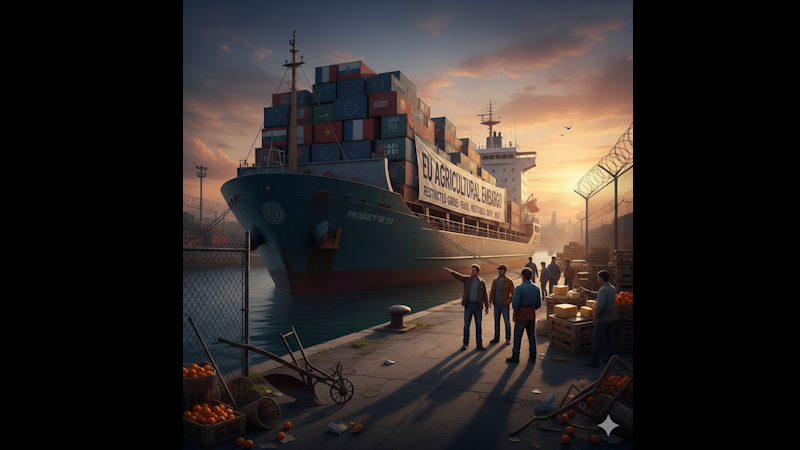
Following the adoption of these sanctions, Russia reacted by implementing retaliatory measures on August 6, 2014, against the USA, the EU, Australia, Canada, and Norway, decreeing a boycott of agricultural products from these countries for a period of one year.
This Russian “retaliation” measure immediately provoked a backlash from Europeans, who, on the one hand, denounced the decision and, on the other, sought to prevent any attempts by a third country or organization to exploit the situation and capture EU market shares. Our country was among 15 nations (Brazil, Argentina, Chile, Colombia, Ecuador, Peru, Uruguay, China, India, Morocco, Israel, Egypt, Turkey, Serbia, and Switzerland) targeted by an initiative in this regard.
According to some analysts, the sanctions imposed by the European Union on Russia, and by Russia on the Union, are seriously affecting the economies of countries such as France, Spain, Italy, and even Germany. Poland, for example, could see its GDP decline by 0.6%. Russia, for its part, expects inflation to rise by one percentage point this year. Moreover, around 130,000 jobs in Europe are at risk.
With the Russian embargo on fresh products, the European Union has already released €125 million to support European producers. According to a study by ING International Trade, the embargo could affect the EU economy by nearly €5 billion.
The Russian embargo on EU agricultural and agri-food products will inevitably have an indirect impact on both Morocco-EU relations and Morocco-Russia relations:
1/ The absence of European agricultural products on the Russian market opens clear prospects for Moroccan agricultural exports, which could serve as an alternative to European exports of these products, especially since the Russian market is a major consumer market—an open market where Moroccan exports will be subject neither to quotas nor to a seasonal calendar. The first Morocco-Russia Economic Forum, held on June 10 in Moscow, provided an opportunity for both parties to explore opportunities for exporting Moroccan agricultural products to this market, particularly citrus fruits, fruits and vegetables, fishery products, grains, and value-added processing of seafood and aquaculture products.
It should be noted that Russia is one of Morocco’s leading clients for citrus fruits. Exports of citrus fruits to Russia are expected to triple within four years. Moroccan exports to the Russian Federation are dominated by citrus fruits, followed by fishmeal and fish oil. Russian exports consist mainly of crude petroleum oil, followed by coal, iron, and raw sulfur.
The only constraints that could hinder the development of these exports are logistical—only one weekly shipping service connects the two countries—the Russian consumer’s demand for product quality, high customs duties and internal taxes, the solvency of Russian companies due to frequent delays in debt payments, and the opacity surrounding distribution channels.
The upcoming session of the Morocco-Russia High Joint Commission, scheduled for mid-September in Rabat, could provide an opportunity to address these various issues in depth.
2/ The embargo against Russia, while presenting an opportunity for Morocco to break into the Russian market, will undoubtedly generate a significant surplus in the European market. This will likely undermine Moroccan exports to this market and reinforce European arguments for tightening access conditions for fresh products to the EU.
3/ Regarding political relations between Morocco and the EU, it is evident that the European side opposes the growing rapprochement between Morocco and Russia, as expressed by European officials during the last session of the DPR and reiterated today by the Head of the EU Delegation in Rabat during a meeting with the Moroccan Ambassador to the EU. The EU fears a reduction of its sphere of influence in favor of Russia in its southern neighborhood, similar to the Ukrainian episode in the east. This explains the démarche undertaken by the Head of the EU Delegation in Rabat to dissuade Morocco from instrumentalizing the Russian embargo to capture shares of the Russian agricultural market. While legally unfounded—especially at a time when the EU has not hesitated to adopt measures restricting access of fresh agricultural products to the European market—the advanced status and privileged partnership linking us to the EU require us to convey reassuring messages to the EU regarding the Moroccan authorities’ commitment not to exploit the current crisis between Russia and the EU, while avoiding interference in relations between private operators. Similarly, it would be highly advisable to avoid publicizing upcoming political activities so as not to offend our European partners.