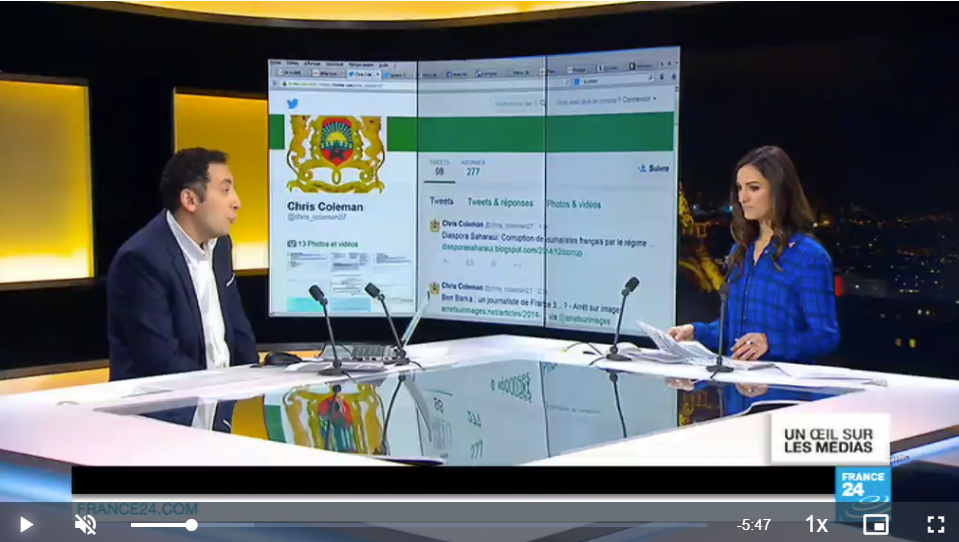
The hacker Chris Coleman used the Twitter platform to leak over 6 GB of documents, emails, and photos targeting the Moroccan government. These leaks implicated French journalists and denounced Moroccan policy in Western Sahara.
Tags: #Chris_Coleman #DGSE #Morocco_Leaks #DGED #Western_Sahara #UN #Algeria #OHCHR #UNHCR #Anders_Kompass #Omar_Hilale #Navi_Pillay #Human_Rights #MINURSO
The hacker—whom we have learned is actually an officer of the DGSE (French External Intelligence)—has provided significant documents revealing the strategies and schemes of Moroccan diplomats in New York and Geneva.
These documents, mostly originating from the Moroccan Ministry of Foreign Affairs and often marked « confidential, » cover various aspects of Moroccan diplomacy. They relate to issues such as the activities and funding of a pro-Morocco lobby active within the highest spheres of UN institutions, influence-peddling practices, and Moroccan strategies to prevent the implementation of UN Security Council resolutions and reports from Human Rights Council special mechanisms. In this regard, the author states that Morocco succeeded in making « friends » among the close staff of the High Commissioners for Human Rights and Refugees.
Every cable confirms what was already known regarding the shameful practices of the Moroccan state, such as buying influence, financing election campaigns in third countries, nepotism, and lavish invitations for those who praise the regime.
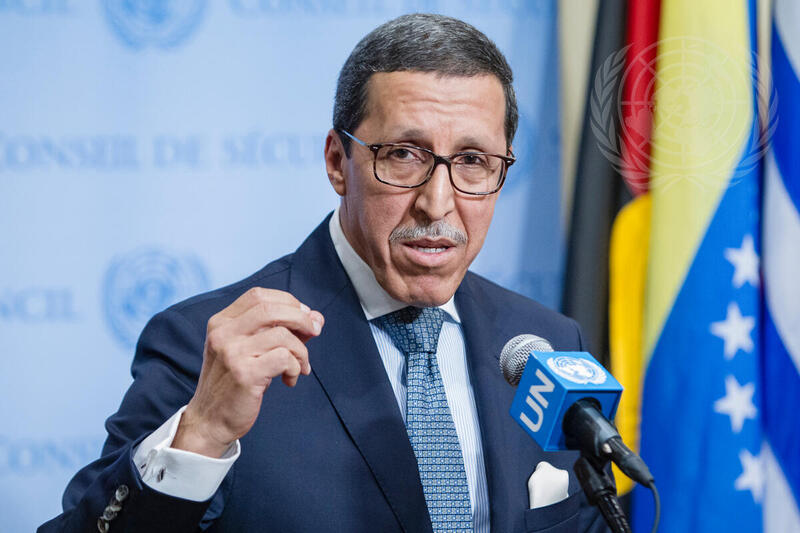
Omar Hilale, who possesses neither the power nor the slightest idea of how to extricate Morocco from the quagmire of the Sahara and the heavy dossier of human rights violations, has turned to corruption as his sole strategy. He is well aware that corruption, while bringing actors together, turns them into accomplices and keepers of shameful secrets. It simultaneously makes them « unshakeable, » explaining why so many corrupt individuals continue to gravitate around the Palace—irremovable and silent in the face of the regime’s abuses.
Read also: Morocco Leaks : Permanent Clash Between Rabat and the UN and the United States
The question of source reliability remains relevant. However, it seems the errors and fallacious interpretations within the documents stem from the Moroccan diplomats themselves, who must assert for their own career advancement that any action favorable to the Sahrawi cause (referendums, human rights denunciations, press conferences, news articles) must be denied and stifled by any means necessary.
Infiltration of the UN High Commissioner for Human Rights
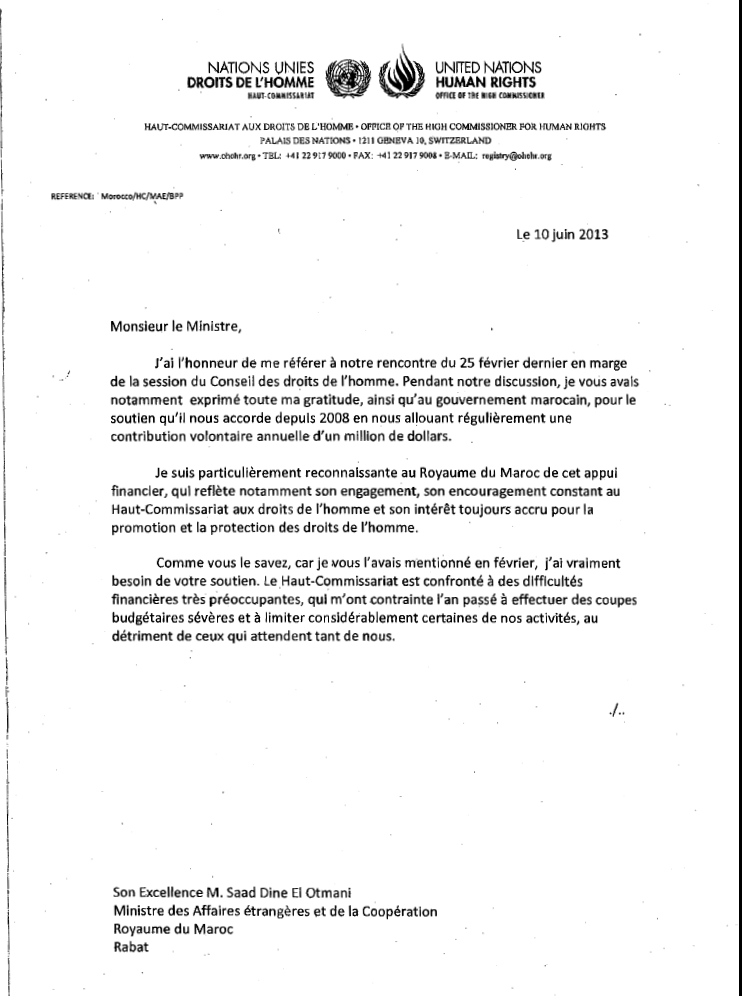
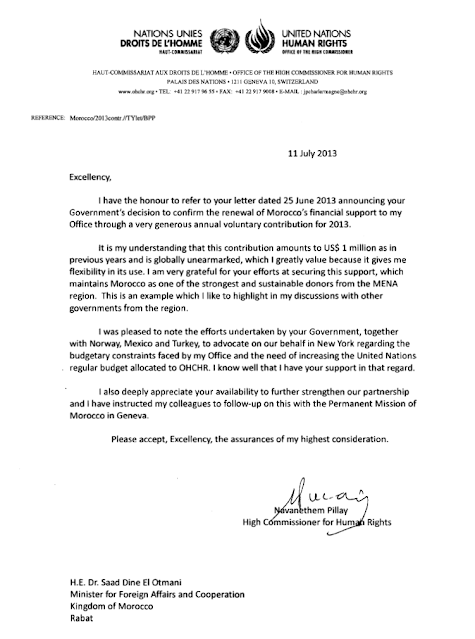
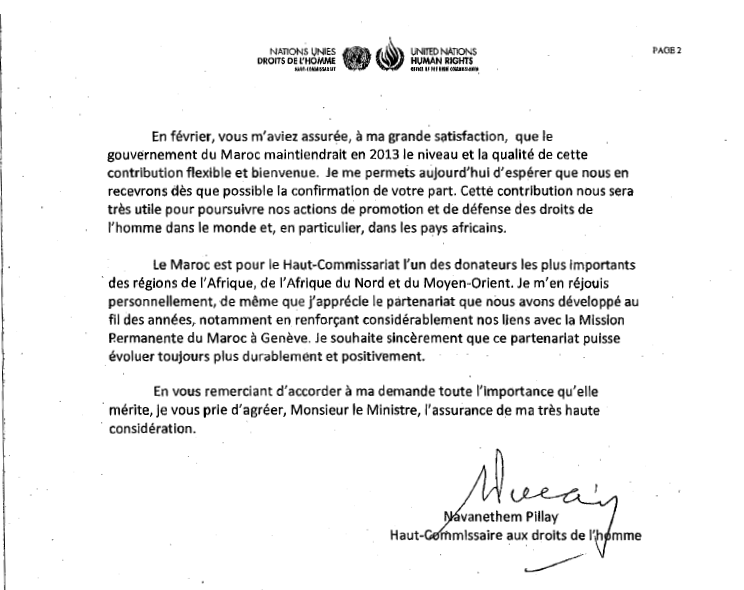
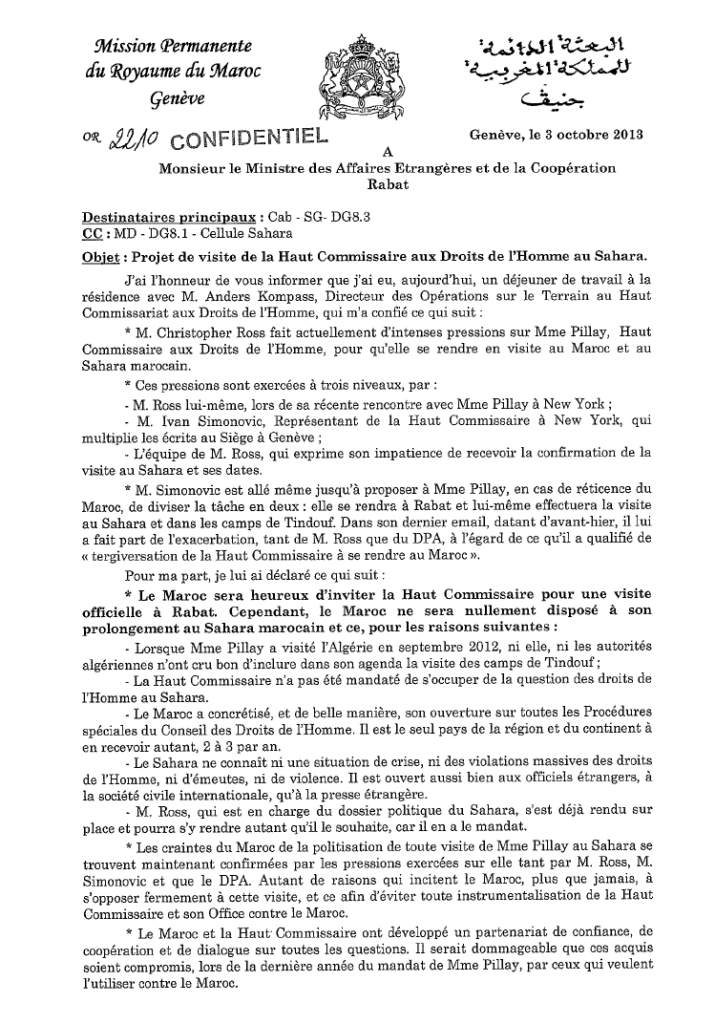
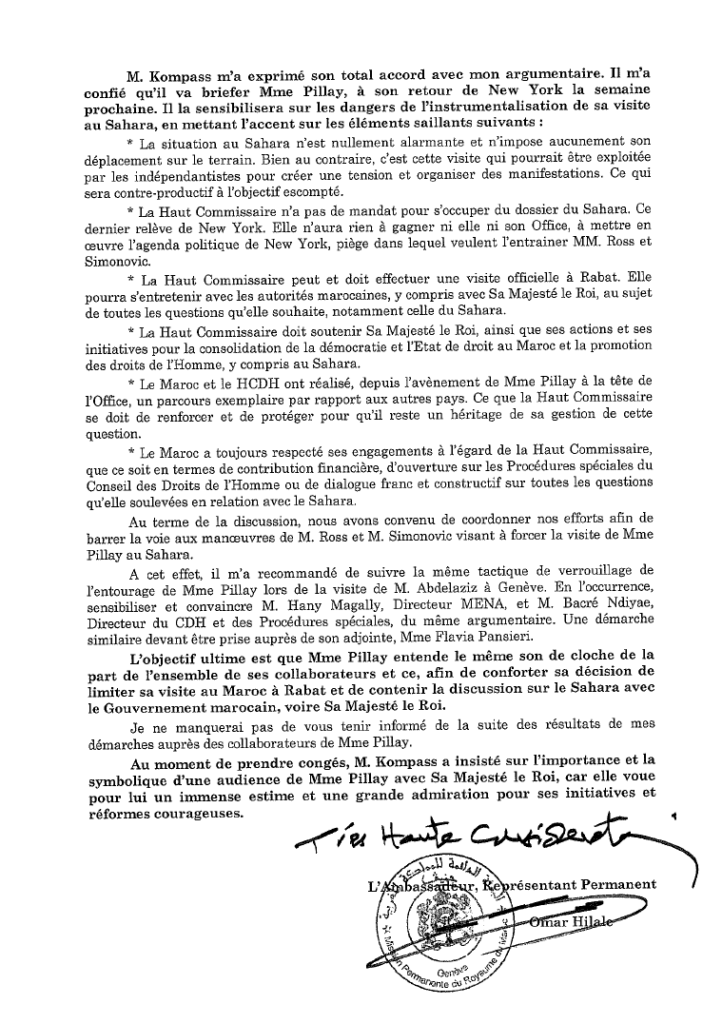
The documents reveal that the Moroccan Ambassador infiltrated the inner circle of the former High Commissioner, Navi Pillay, and was able to manipulate her actions regarding the management of human rights violations in Western Sahara. He did not hesitate to financially support Navanethem Pillay (document dated July 16, 2013) and members of her office to dissuade her from any action contrary to Morocco’s wishes. Ms. Pillay appeared to be very attentive to the desires, and even the orders, of her generous Moroccan friends.
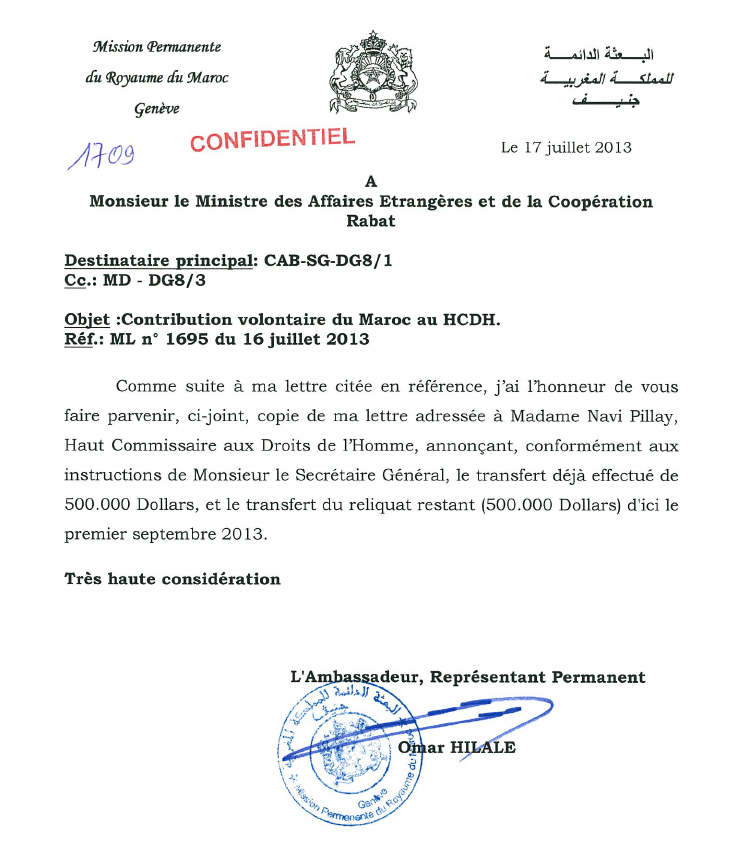
At the bottom of a diplomatic cable to his minister on July 17, 2012, Ambassador Omar Hilale wrote:
« I would like to recall the imperative of transferring the balance of $500,000, as Morocco’s contribution to the OHCHR budget for 2011, which the High Commissioner has twice expressed a wish to receive. This transfer will help make Ms. Pillay more attentive to our concerns regarding her Office’s contribution to the next UN Secretary-General’s report on the Sahara. »

The Moroccan mission did not rely solely on money paid as donations. The Ambassador reveals he successfully enlisted « very good friends » among Ms. Pillay’s staff, such as the Swede Anders Kompass (Director of Field Operations) and the Senegalese Bacre Waly Ndiaye (Director of Special Procedures). For Omar Hilale, these two were more than friends; they showed limitless zeal in serving Moroccan plans and manipulations within the Council to block any improvements to human rights in Western Sahara.
Read also : Morocco Leaks: When Omar Hilale loses the money intended to bribe the UN
Furthermore, other cables reveal how the Ambassador obtained crucial information from Kompass and Ndiaye, who participated in closed-door meetings at the Moroccan embassy. Their goal: to provide secret information about a meeting between Christopher Ross and Navi Pillay. On another occasion, a meeting was dedicated to the visit of the Sahrawi President, Mohamed Abdelaziz, to the Council in May 2013. In both cases, the Ambassador and his two friends maneuvered to limit the impact of these visits and influenced Pillay to ensure she did not act in a way that harmed Moroccan interests.
They specifically worked to:
- Dissuade her from visiting Western Sahara in 2014.
- Ensure the OHCHR’s contribution to the UN Secretary-General’s report was favorable to Morocco.
- Pressure Pillay to avoid making « concessions » to President Mohamed Abdelaziz.
- Ensure Anders Kompass led a technical mission to the Sahara in May 2014 instead of the New York representative, who was deemed « hostile » to Morocco.
These compromising revelations prove the « mafia-like » methods used by representatives of « His Majesty » worldwide, based on the corruption of international officials. While the Sahrawi people suffer violations of their basic rights, the officials responsible for these schemes remain unpunished. Has the Makhzen (the Moroccan ruling elite) reserved a golden retirement for them in a Moroccan oasis?
The Pro-Morocco Lobby and Journalists
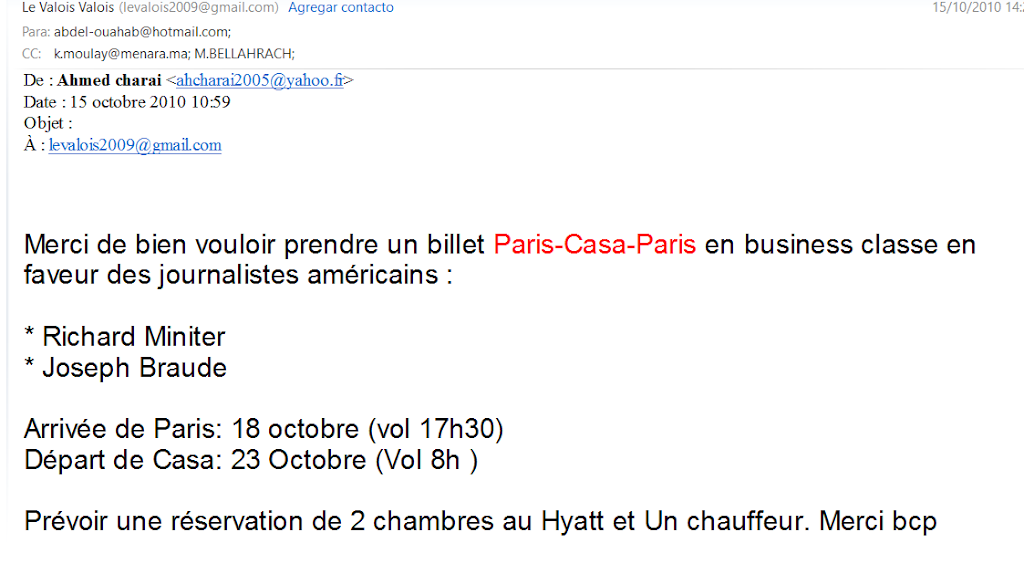
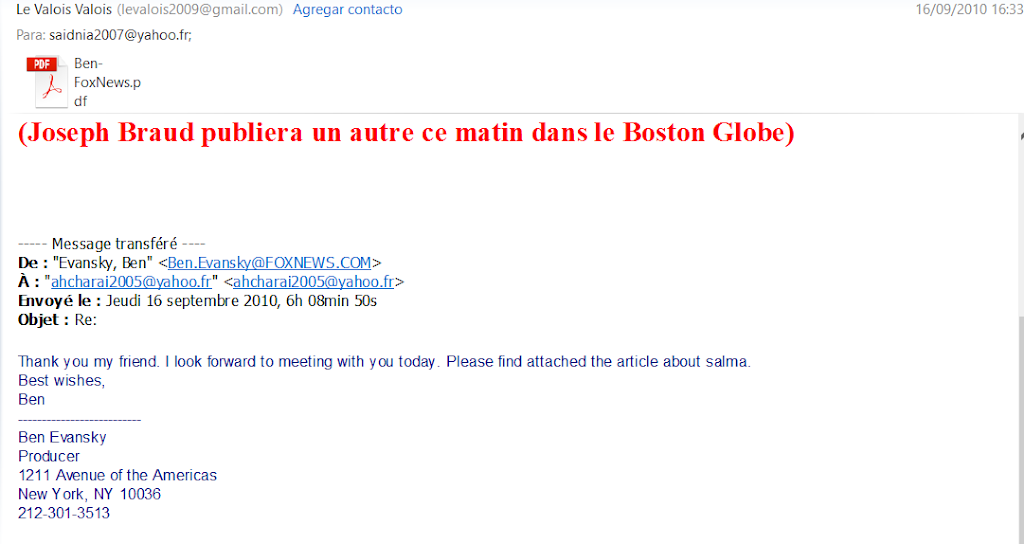
The documents implicate journalists Richard Miniter and Joseph Braud, who attempted to convince American public opinion that the Polisario Front had links to « jihadist terrorism. »
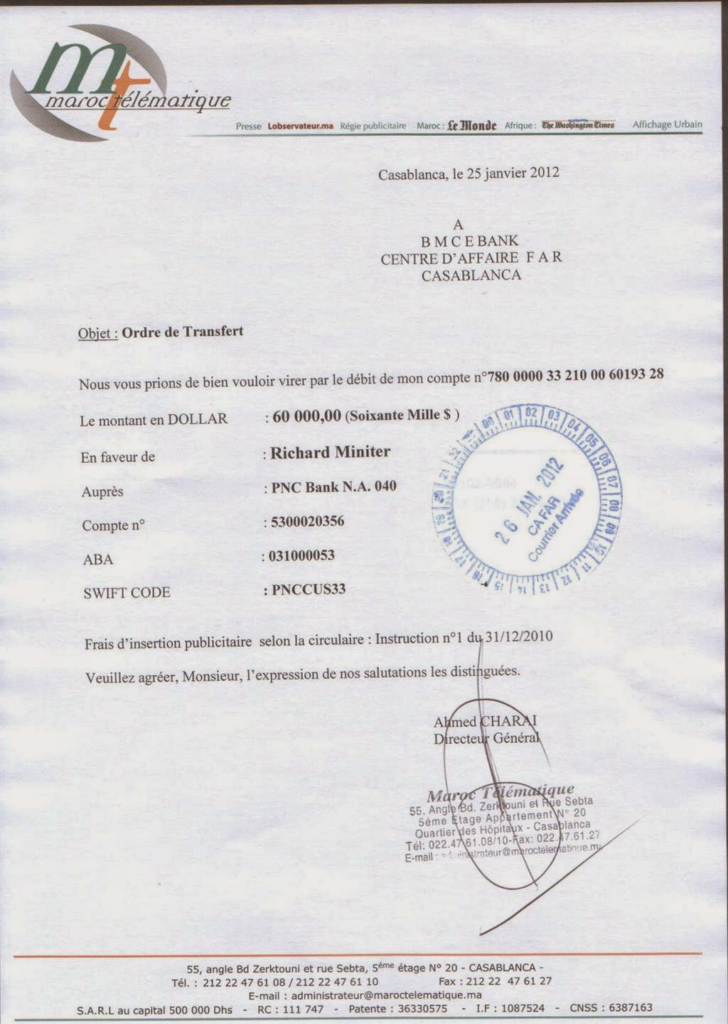
- Richard Miniter: A journalist who consistently slanders the Sahrawi people and Algeria while praising the Makhzen. Documents show this coincided with Miniter receiving thousands in cash ($60,000, according to one document) and invitations for luxury trips to Morocco.
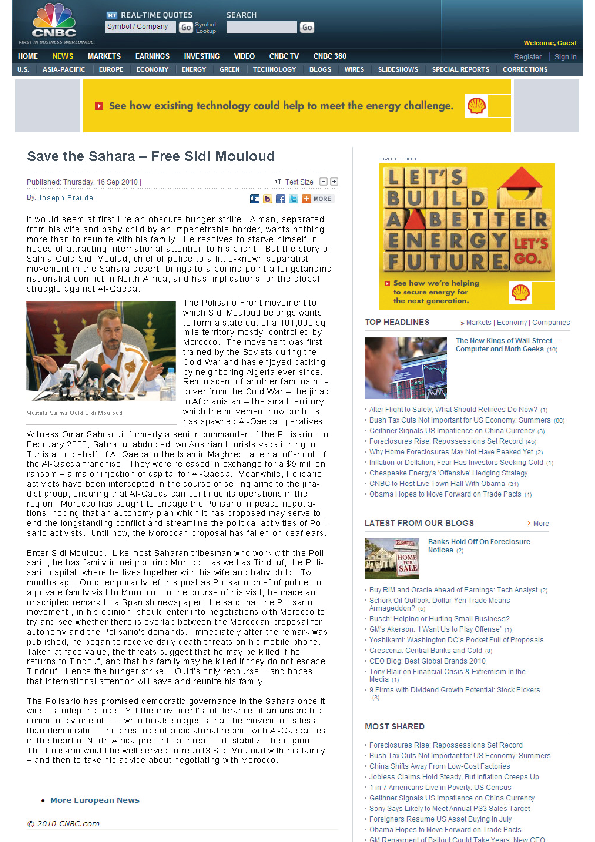
- Joseph Braud: Published defamatory articles against the Sahrawi people and received money from Makhzen services. He reportedly authored reports for Morocco on how to « neutralize » American journalists favorable to the Sahrawi cause.
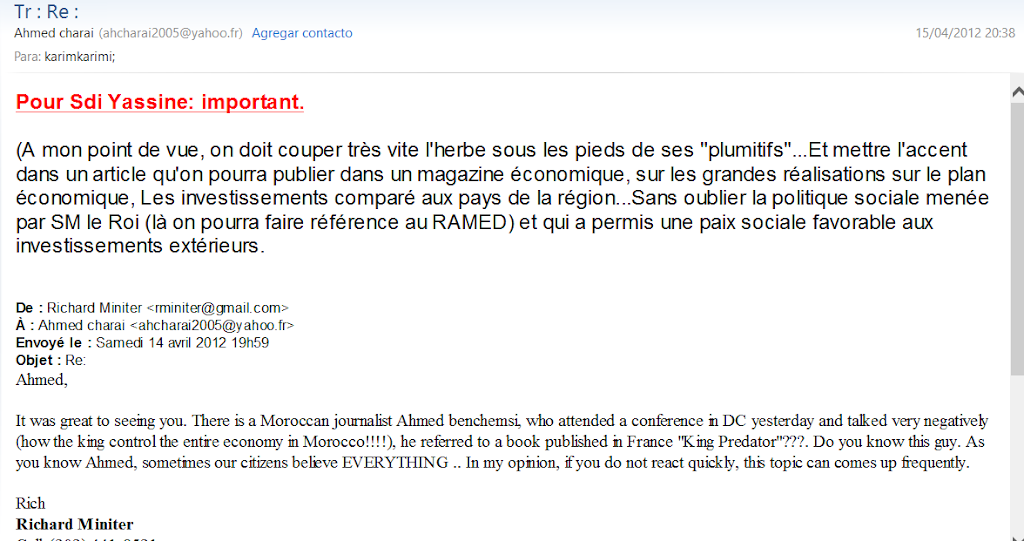
Within these documents, it is observed that this coincides—as if by chance—with the fact that Miniter received thousands of dollars in cash ($60,000 according to one document) as well as invitations for luxury trips to Morocco. As for Joseph Braud, he also published defamatory articles for the services of the Makhzen. According to the documents revealed by ‘Chris Coleman,’ he also prepared reports for the Moroccan services regarding American journalists favorable to the Sahrawi cause and how to neutralize them.
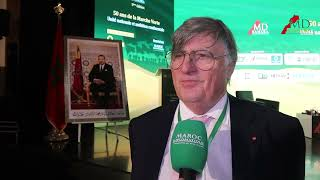
Henri Louis Védie: An economics professor who wrote a book on the « performance of the Moroccan economy » commissioned by Moroccan intelligence (DGED). A report from Mourad El Ghoul (Chief of Staff to Yassine Mansouri) describes Védie as a « reliable relay » for the agency. Védie even proposed twinning his French town, Bricquebec, with the city of Boujdour as a gesture of friendship.
Read also : Morocco: The DGED Behind the European Parliament Corruption Scandal
He was commissioned to write a book on « the performance of the Moroccan economy. » It was presented in Paris on February 18, 2010, on the occasion of the commemoration of the tenth anniversary of Mohammed VI’s accession to the Moroccan throne.
Mourad El Ghoul, chief of staff to Yassine Mansouri, submitted a detailed report to his superior regarding the book’s presentation; the full text, as revealed by the Moroccan hacker Chris Coleman, is as follows:
Subject: Paris presentation of the book by Professor Henri Louis Védie: « Morocco: The Test of Facts and Achievements. »
I have the honor to respectfully report to the Director General on the proceedings of the presentation of the latest work on the Kingdom by Professor Henri Louis Védie, titled « Morocco: The Test of Facts and Achievements, » dedicated to the current performance of the Moroccan economy. This book was commissioned by this General Directorate, in collaboration with Mr. Benatiq, as part of the commemoration of the tenth anniversary of the accession of HIS MAJESTY THE KING—may God assist Him—to the Throne of His Glorious Ancestors.
The presentation of the work in question took place on Thursday, February 18, 2010, from 7:00 PM to 11:00 PM, at the Cercle National des Armées in Paris, before an audience of over 70 guests. The majority were French, belonging to the economic, labor union, academic, and military sectors of the country.
The event was covered by national media (RTM, 2M, MAP) and international outlets (LCI, France 24, Le Figaro, Radio Orient, Les Afriques, the Centre France group (eight French titles), Asharq Al-Awsat, etc.).
In his particularly objective presentation, Professor Védie perfectly demonstrated how Morocco has transitioned, since 1999, from a hypothesis of economic growth to a reality of development affecting various sectors (Agriculture, Tourism, Infrastructure, Education, etc.). Supporting his demonstration with figures, the speaker showed that Morocco, despite the international financial crisis, has managed to preserve its fundamentals (controlled inflation, low budget deficit, and consolidation of the Kingdom’s external economic position).
Furthermore, Professor Védie explained that efforts remain to be made, particularly in the fight against poverty and unemployment. However, he assured that the Moroccan authorities are fully committed to meeting these major challenges, thanks to the steady growth the country has experienced for a decade. In this context, the French economist highlighted the importance of creating major development hubs, referring to the Tangier-Tetouan region and the Saharan provinces, as well as attractive free zones allowing for the establishment of high-value-added economic activities.
The author also made a point of responding to those who objected that the development of the Kingdom’s Southern Provinces had hindered the development of the Northern and Eastern regions. He clearly highlighted the fact that economic development in the Kingdom concerns the entire national territory and that there are no « orphan » regions, as evidenced by the multiple travels throughout the country by HIS MAJESTY THE KING—may God assist Him.
Finally, the French economist praised the foresight of the Moroccan authorities who, in the context of the international financial crisis, knew how to « prepare for the future » and will be able to manage the post-crisis period, having respected economic fundamentals.
Remarks: The message of the Kingdom’s economic insight was well-disseminated among the French audience present at the Cercle National des Armées.
HIS MAJESTY THE KING’S Ambassador to Paris, Mr. Mostafa Sahel, was an excellent asset to this event through the answers he provided to certain questions about the Kingdom that were not mastered by the speaker (the fight against Islamic radicalism, money laundering, religious field reform, etc.).
Professor Védie, through the mediation of Mr. Benatiq, is now a « relay » won over to this General Directorate and should be maintained. The individual is thus disposed to participate in conferences in South America alongside Professors Cherkaoui and Ouali to plead our national cause in that part of the world. He also has the idea of writing, in a year or two—subject to the Director General’s agreement—a new, more dense work on Morocco. Finally, in a gesture of friendship toward Morocco, he proposes to twin the small town of Bricquebec (5,000 inhabitants) in the Manche department, where he is the mayor (UMP leaning), with the town of Boujdour.
Respectfully, Mourad RHOUL
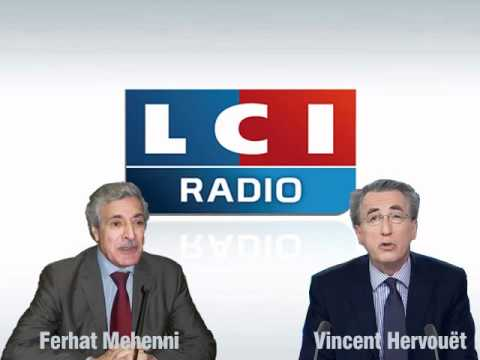
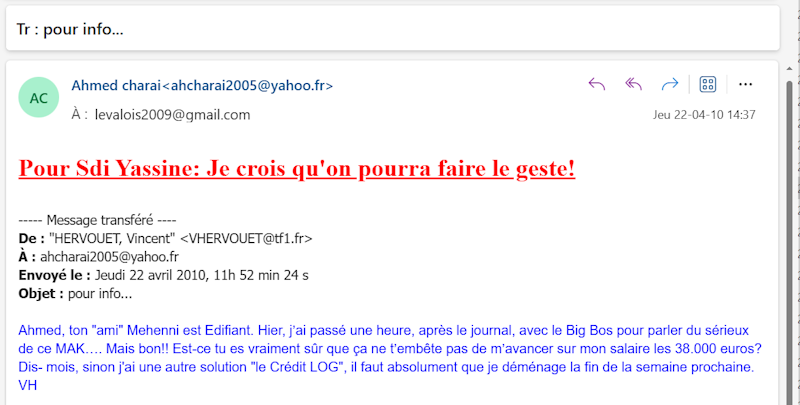
Vincent Hervouet (LCI): Allegedly « hired » to relay propaganda. According to the documents, he made efforts to broadcast information about a « Kabylie Liberation Movement » to provoke Algeria, in exchange for luxury vacations in Morocco at the government’s expense.
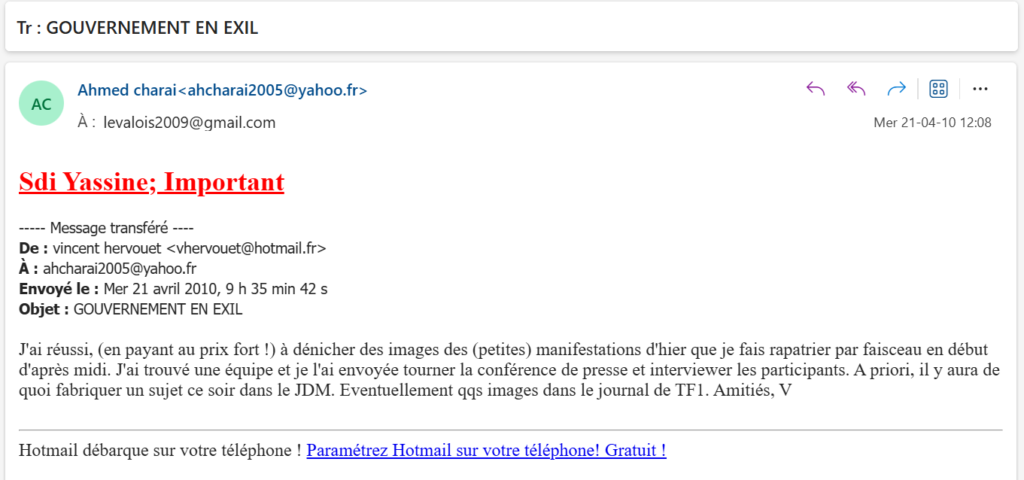
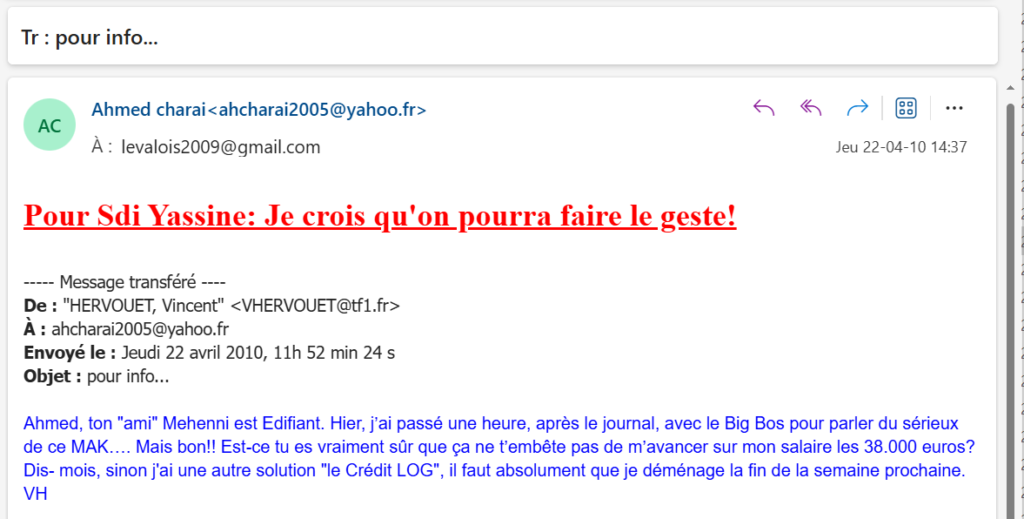
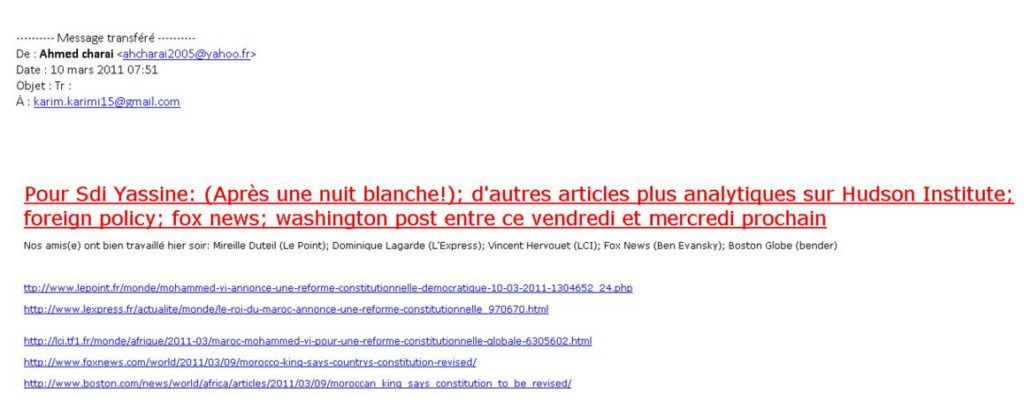
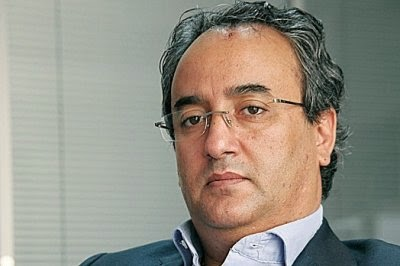
Their recruiter, Ahmed Charaï—one of many henchmen of the Makhzen—was convicted by the U.S. justice system in 2011 for making a false customs declaration. Having departed from Paris, Ahmed Charaï landed at Dulles International Airport (Washington, D.C.) on September 14, 2011, according to the same document. He declared $10,000 in cash. Upon inspection, it was revealed that he had five times that amount on his person, curiously contained in sealed and labeled ‘envelopes.’ According to his statement before the judge, Ahmed Charaï was in possession of $15,000 in undeclared funds. The money was intended for the payment of pro-Moroccan lobbyists, as attested by ‘Chris Coleman.
UN Secretariat Ethics Rules (A/69/292): As international civil servants, UN staff members and the Secretary-General are accountable only to the Organization and swear not to seek or receive instructions from any government or external authority. Member States commit to respecting the exclusively international character of their responsibilities and to refrain from seeking to influence them unduly.