Tags : #France #Year #2025_Muslims #islamophobia #Grand_Mosque_of_Paris #Chems_Eddine_Hafiz #Bruno_Retailleau
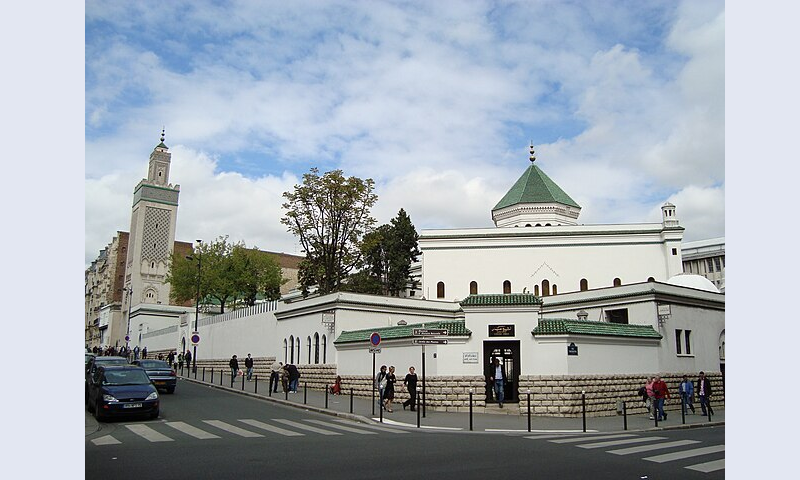
The Paris Mosque calls on the French to stop denying the truth.
The Rector of the Grand Mosque of Paris, Chems-Eddine Hafiz, described the past year as one of those that “carve themselves into bodies and minds,” due to the scale of challenges faced by the Muslim community in France—challenges that reached the level of elimination based on religion. He cited several assassinations in which Muslims lost their lives, while at the same time criticizing the silence of the French authorities in the face of such acts and practices.
In a post published on the official account of the Grand Mosque of Paris on Wednesday, December 31, 2025, Chems-Eddine Hafiz wrote: “There are years that pass without leaving a trace. And there are other years that are etched into bodies and minds—not by their noise, but by what they demand deep within us. The past year was one of those for Muslims in France: a heavy year, filled with challenges…”
The Rector recalled the brutal murder of a young Muslim who was killed while praying in a French mosque, a crime driven by racist motives, amid what he described as an unjustified abandonment by the former right-wing Minister of the Interior, Bruno Retailleau, who did not even bother to visit the victim’s family or the crime scene (the mosque). This sparked widespread anger within the Muslim community, reflected in the family’s refusal to receive Retailleau, who only attempted a visit two days after the crime.
Chems-Eddine Hafiz noted that Muslims in France are subjected to such treatment on religious and racial grounds, citing the same incident: “He was killed because he was Muslim. His death was met with swift silence, as if some lives can be erased faster than others. That silence was deeply impactful, leaving a mark that goes far beyond the grief of his loved ones.”
He added that the same year saw other killings based on racial and religious motives, such as the case of a Tunisian migrant shot dead by French police.
He also pointed to the growing phenomenon of Islamophobia in France, which has reached unprecedented levels, warning: “In addition to these tragedies, there is a deeply rooted climate of Islamophobia—rarely loud, but profoundly entrenched.”
He explained that this results in “daily exhaustion” for the Muslim community, made up of suspicion, stares, and distancing that has become commonplace, as well as moral fatigue felt by many without always being able to express it, as it has become disturbingly normalized.
On this occasion, the Rector of the Grand Mosque of Paris called on the French people to “stop denying this reality, downplaying it, or marginalizing it in public debate. The goal is not to elicit special sympathy, but to confront the truth with honesty and clarity, without distortion or manipulation.” This message was implicitly directed at right-wing and far-right politicians, as well as media outlets aligned with them, which fuel such practices and spread a culture of hatred and racism.
According to Chems-Eddine Hafiz, the Muslim community in France has shown “a strong attachment to the Republic and its principles.” Yet, it is treated by some politicians and opinion-makers as though it were not part of the French social fabric, making this coexistence, he said, “deeply troubling, because it contradicts simplistic narratives and forces us to think differently.”
Conversely, many moderate politicians in France attribute the rise of hostility toward migrants and Islam to the rhetoric of certain politicians obsessed with immigration, foremost among them the former Minister of the Interior and leader of the right-wing Les Républicains party, Bruno Retailleau, as well as Marine Le Pen and her right-hand man Jordan Bardella of the far-right National Rally party, who have made hostility toward migrants—particularly those of Muslim background—a central pillar of their narrow political and electoral agendas.