Tags : #Morocco #french_journalistes #DGED #Ahmed_Charaï #Western_Sahara #Mourad_El_Ghoul #Mireille_Duteuil #Dominque_Lagarde #José_Garçon #Vincent_Hervouët #hacker_Chris_Coleman #Libération #Le_Point #LExpress #TF-1 #LCI
Confidential emails leave no doubt about the relationships between four French journalists specializing in the Maghreb and the Moroccan authorities.
At the center of these very particular relationships lies the Western Sahara issue, the kingdom’s obsession. In order to defend its colonial policy and prevent the organization of the self-determination referendum that the United Nations calls for year after year, Morocco needs the support of the major powers. In France, the backing of influential journalists has played an important role with both public opinion and the French government. According to dozens of emails published online by “Chris Coleman,” this support was not free. The messages mainly concern exchanges between Ahmed Charaï, editor-in-chief of L’Observateur du Maroc, a French-language weekly, and Mourad El Ghoul, chief of staff to the director general of the DGED, Morocco’s external intelligence service.
A “voluntary” collaboration of considerable weight
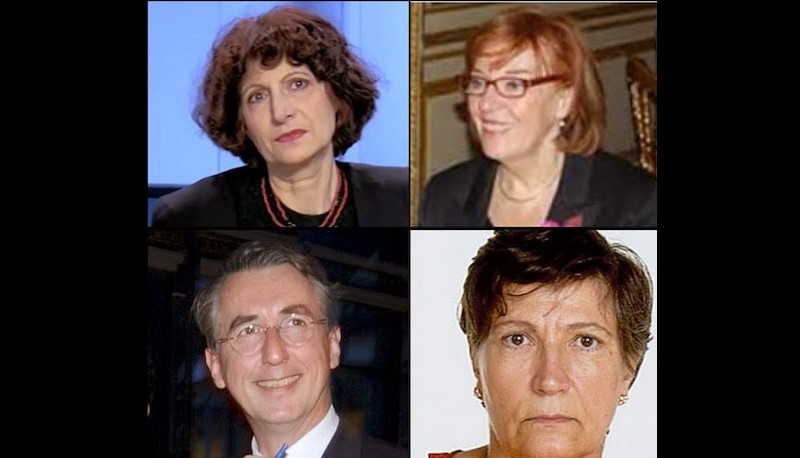
The two men discuss the collaboration with L’Observateur du Maroc of four journalists holding prominent positions in French media: Dominique Lagarde, former deputy editor-in-chief of the World section at L’Express; José Garçon, former journalist at Libération; Mireille Duteil, former editor-in-chief of Le Point and current columnist— all three specializing in Maghreb coverage— as well as Vincent Hervouët, foreign affairs columnist on TF1 and LCI and host of a daily program, Ainsi va le monde. For several years, all four have provided the magazine with an impressive volume of content. Between January and the end of October 2014 alone, the last three each published between 22 and 26 columns, all sharing one common feature: they never once mentioned Morocco’s internal situation.
Questioned at the end of October by Daniel Schneidermann’s website Arrêt sur images, all four denied having been paid for these columns. They described it as voluntary work done as a favor to a friend. An answer that failed to convince a specialist in the links between French elites and the Makhzen: “I don’t know a single journalist who would write for free for years, and for a newspaper that nobody reads! I have not the slightest doubt that they were paid.”
Connections with Moroccan intelligence
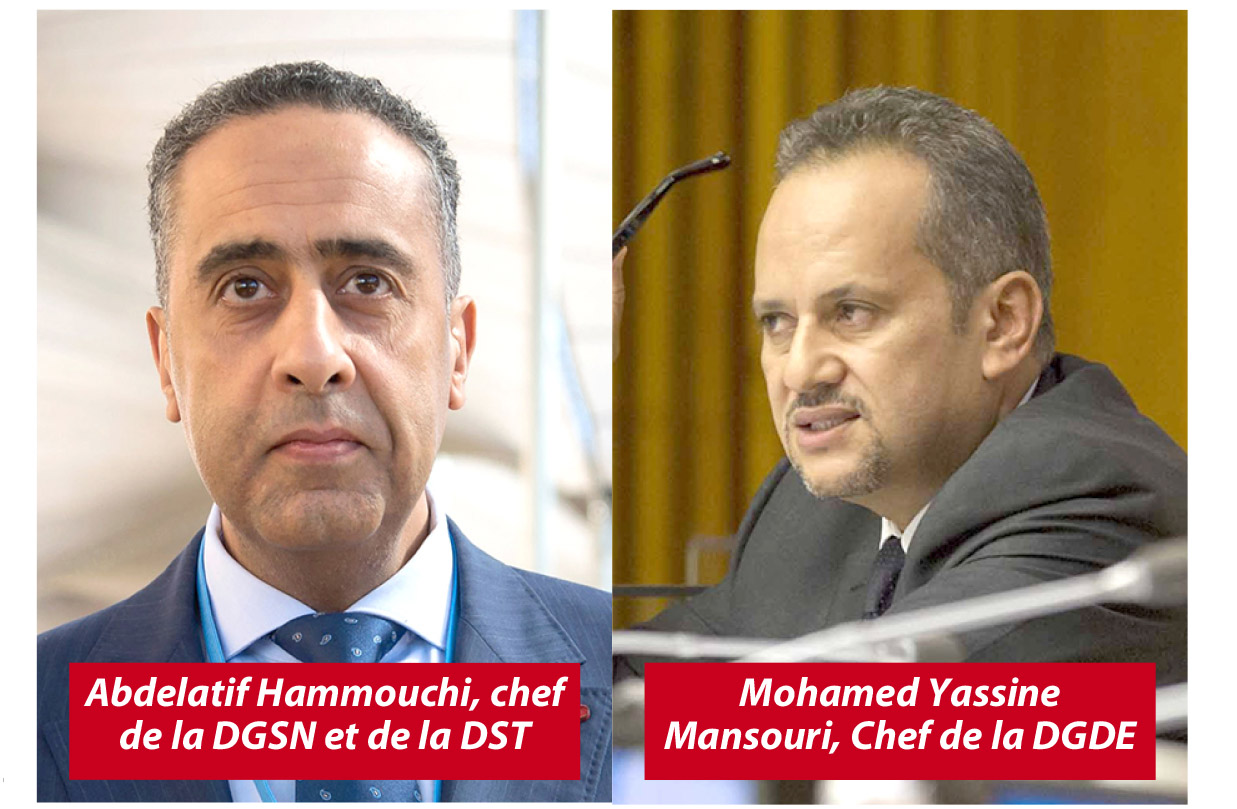
Several of the accessible messages begin with “Sdi Yassine,” which most likely refers to Yassine Mansouri. According to several sources, Ahmed Charaï is “known for his close ties to the DGED.” A member of numerous think tanks, he is presented as an expert on Morocco and North Africa, well-versed in praising royal action and promoting the “Moroccan exception.” Several emails show his relationships with representatives of the Jewish community, such as the American Jewish Committee or the Sephardic National Alliance, on whom “one can rely” regarding the Western Sahara file, as he emphasizes in messages sent directly to “Sdi Yassine.”
Mysterious financial dealings
Regarding the French journalists, the exchanges between Ahmed Charaï and “Sdi Morad” are explicit. On October 2, 2011, for example, Charaï specifies the sum of €6,000 that he would need to hand over to each of the four journalists during a meeting in a Paris hotel. For Vincent Hervouët, the amount is detailed: “€2,000 per month for L’Observateur and €1,000 per issue for Foreign Policy,” an American online magazine from the Slate Group to which Hervouët contributed and of which Charaï was the publisher of the French-language edition.
Other messages mention the existence of financial transactions between Ahmed Charaï and Vincent Hervouët. These are messages sent by Hervouët himself to Charaï, then forwarded by the latter to his contact—apparently the DGED. On April 22, 2010, for example, the French journalist asks Ahmed Charaï: “Are you sure it doesn’t bother you to advance me the €38,000 from my salary?” Before forwarding it to his usual contact, probably Yassine Mansouri, Charaï adds: “For Sdi Yassine. I think we can make the gesture!”
The financial link between the two men goes beyond the production of columns. The LCI presenter is a 10% shareholder in a company headed by Ahmed Charaï: Audiovisuelle International, which broadcasts Med Radio. As a shareholder in the capacity of a “qualified operator,” Vincent Hervouët had participated in 1981 and 1982 in the launch of Radio Méditerranée Internationale (which later became Medi 1).
Zealous servants of Moroccan government propaganda
On November 23, Hervouët broadcast “exclusively” images of “terrorists” in a camp belonging to Al-Qaeda in the Islamic Maghreb (AQIM). He explained that “proven links” existed between around fifty members of the Polisario and AQIM, and that Sahrawi refugee camps near Tindouf in Algeria constituted a “new breeding ground” for recruiting terrorists. This was partial and distorted information, regularly repeated in French and Moroccan media.
Two days after the broadcast, the journalist asked his friend Ahmed Charaï to reserve three rooms for him at the Sofitel in Marrakech so he could spend the year-end holidays there with his family. In this message, forwarded by Charaï to his DGED contact, Vincent Hervouët congratulates himself on having received “at least four calls from different departments of my dear government (…) about the video— not bad!” He adds sarcastically: “On the other hand, the Polisario leadership sent a letter last night to the channel’s president protesting what they called the ‘amalgamation’ between AQIM and the Polisario Front; they want a right of reply—yeah, right!!!”
The same mocking tone appears in exchanges between Vincent Hervouët and Ahmed Charaï in April 2010. This time, it concerns exaggerating—apparently to harm the Algerian authorities—the proclamation in Paris of a government-in-exile by the Movement for the Autonomy of Kabylia (MAK). The journalist explains that he had some difficulty making the story credible. He had to build it, he writes, using images of “(small) demonstrations,” “found (…) by paying a high price!” He then explains that after a strong reaction from the Algerian foreign minister, he had to spend “an hour with the Big Boss to convince him of the seriousness of the MAK.”
In this affair, the French journalist also plays the role of communications agent for the Moroccan kingdom. He helps Ahmed Charaï publicize the MAK press conference in Paris. Charaï appears to have been its organizer. In an email dated April 20, he says he personally contacted the usual journalists. “The invitations need to be sent,” he asks his contact. Ahmed Charaï explains to his intelligence contact that Hervouët, then president of the diplomatic press association, had called the head of AFP’s political desk.
Two months later, three of these journalists reiterated their denials while acknowledging that they had worked for Charaï’s media outlets.
It was Dominique Lagarde who responded first, on L’Express’s website, asserting that none of her L’Express articles “were written under pressure or to obtain a favor,” and that she had “never received money or gifts,” nor “accepted a single invitation, whether professional or private.”
She is, however, more precise about her various collaborations with publications edited by Charaï. She first worked for a Moroccan digital outlet created in 2002. According to her, this involved “publishing, from time to time, posts (brief comments, predecessors of blogs), depending on current events.” She claims this work was unpaid, but it was clearly very regular: Arrêt sur images found 19 of her columns, initially published in 2008 on the Lobservateur.ma website (and later republished by Maghress.com).
The second collaboration acknowledged by Lagarde: she worked for the Moroccan version of the American magazine Foreign Policy, run by Charaï. “Three short articles in total were published under my name, none of them about Morocco,” she explains. Finally, when Charaï asked her to collaborate with the print version of the weekly L’Observateur du Maroc, she refused. “Contrary to what has been published here and there in recent weeks, I have therefore never written in the pages of L’Observateur du Maroc, which was launched in 2008, nor for the newspaper’s website, opened shortly thereafter. Anyone can verify this,” she states. These clarifications are intended to invalidate the payment of €6,000 mentioned in an email dated… 2011.
On the Libération website, two other journalists implicated, José Garçon of Libé and Mireille Duteil of Le Point, also signed a joint op-ed rejecting the accusations made by Chris_Coleman24, describing the entire affair as a “smear machine.” For what purpose? They suggest that they are “nothing more than a kind of ‘loss leader’ intended to launch, thanks to its sulfurous aspect (‘corruption of the French press’), this campaign against Morocco.”
Like Lagarde, Garçon and Duteil acknowledge having worked for Foreign Policy and L’Observateur du Maroc. Were they paid for this work? Without formally denying it, they claim that their “journalistic output” within their respective newspapers (Libé and Le Point) “speaks infinitely louder than any statement” on their part regarding the fact that they “never received money or gifts—as some hacked emails claim—to carry out any kind of ‘promotion’ of the kingdom.”
The fourth—and most heavily implicated—Vincent Hervouët (journalist at LCI and former president of the diplomatic press association) partially challenged the authenticity of the emails linking him to the affair, emails whose authenticity Arrêt sur images has validated.
Vincent Hervouët also maintains that some of the emails are indeed his, but that they were manipulated, truncated, or taken out of context. “We’ve been looking at this for two months with colleagues,” the journalist says. “And the more I try to understand, the more I sink into an abyss of perplexity. Some emails are completely fake, others are three-quarters fake, and in others only one word has been changed. I even think I’ve identified two different forgers—one who makes lots of spelling and syntax mistakes, and another who is more subtle.”
“It mixes the false and the true,” Vincent Hervouët adds. “For example, I’m accused of writing for a Moroccan press group. That’s true—I even sign my own name. Mr. Charaï is someone I’ve known for a long time. I even helped him set up a radio station a few years ago. I’ve also done training sessions with him, and in that case, of course, I stayed in a hotel.” For the LCI presenter, there is no doubt about the culprit. “Behind Mr. Coleman, there is a powerful security service,” he accuses. “It has even already been identified. We are facing a war between intelligence services, with extremely powerful machinery.” Their goal? “They want Charaï’s head,” Vincent Hervouët asserts.
#Morocco #Marocleaks #AhmedCharaï #LeNouvelObservateur #VincentHervouet #MireilleDuteuil #JoséGarçon #DominiqueLagarde #WesternSahara #Algeria