#Morocco #Senegal #CAF #CAS #corruption #Mankeur_Ndiaye #Western_Sahara #Africa_Cup
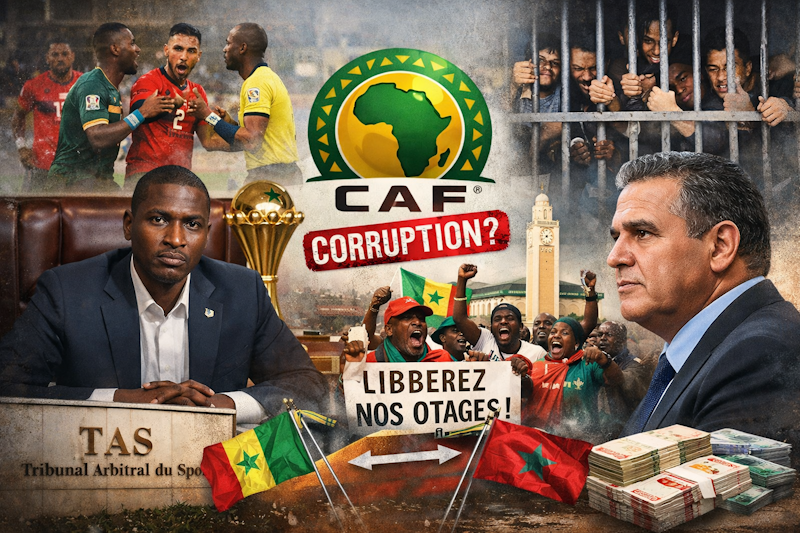
The Senegalese government on Wednesday called for an international investigation into “suspicions of corruption within the governing bodies of CAF,” the Confederation of African Football, following the CAF appeals jury’s decision to strip Senegal of its 2025 Africa Cup of Nations title and award it to Morocco.
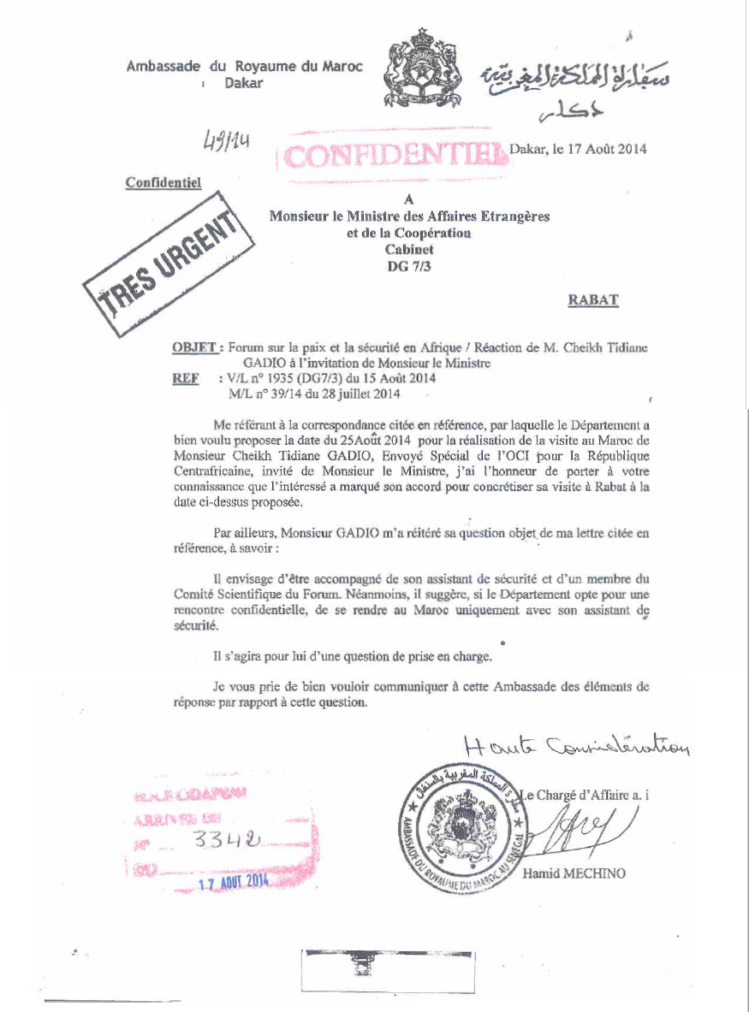
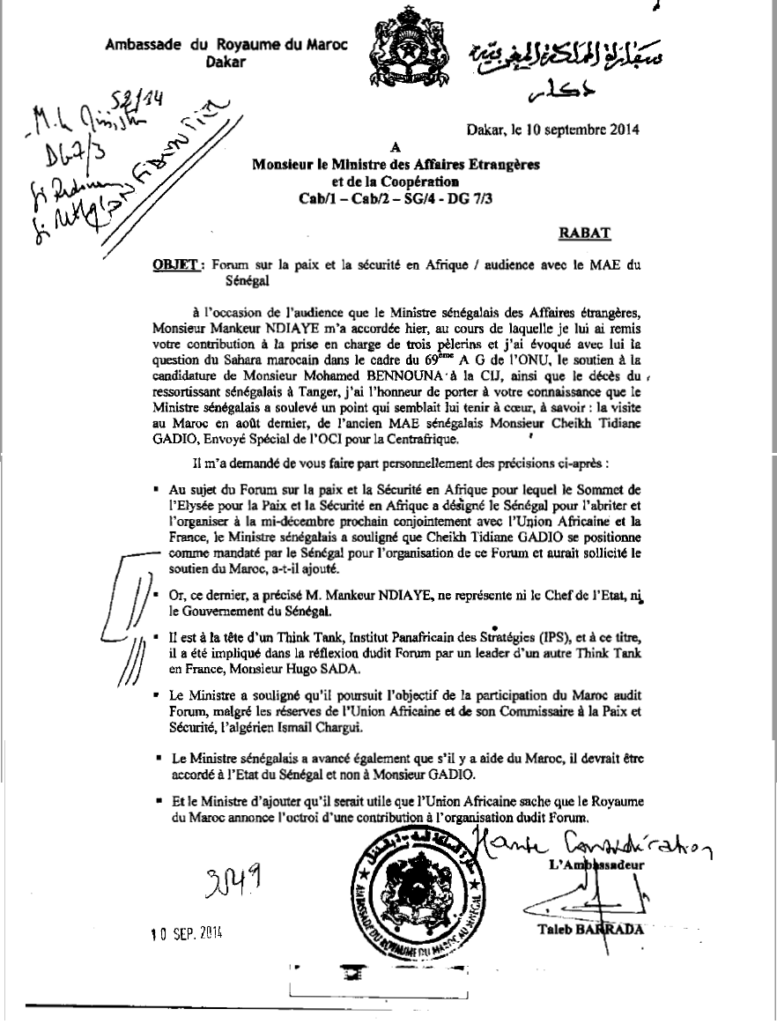
Ironically, Senegal has long been regarded as a preferred ground for Moroccan lobbyists, particularly in activities related to the African Union and the Western Sahara issue. In 2014, a conflict between Morocco’s DGED and France’s DGSE led to the latter publishing thousands of confidential documents from Moroccan diplomacy. Among these were letters from the Moroccan ambassador to Senegal at the time, Taleb Berrada, addressed to his superiors in Rabat.
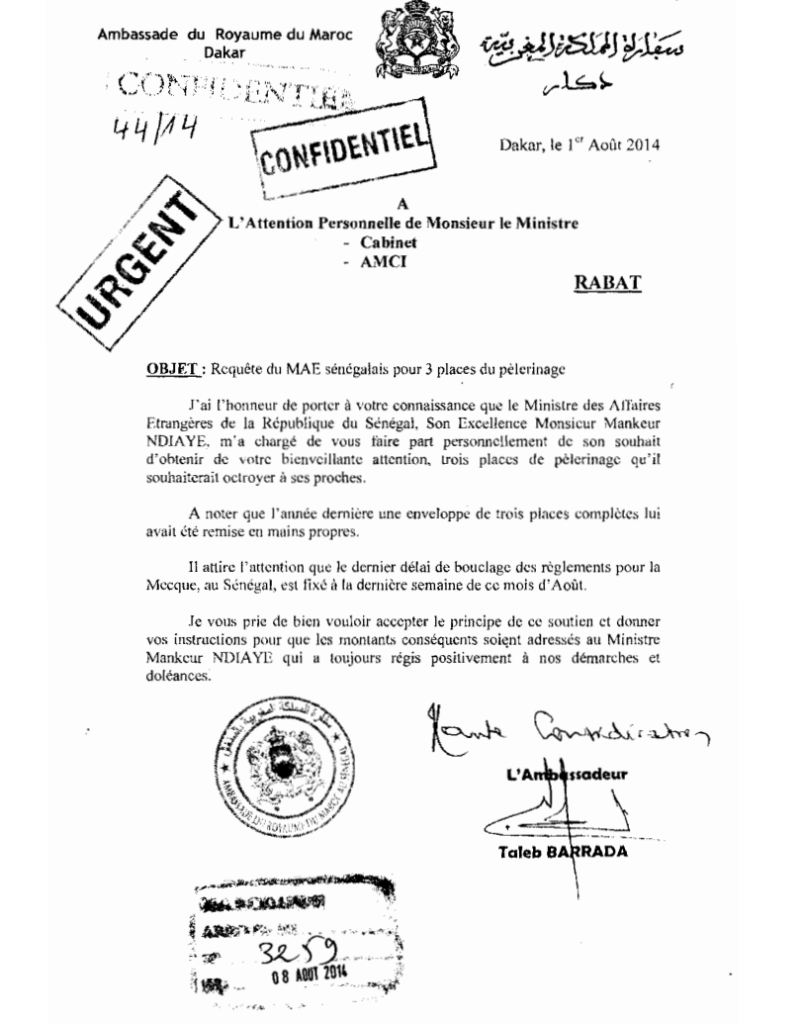
According to these letters attributed to the Moroccan embassy in Dakar, former Senegalese Foreign Minister Mankeur Ndiaye allegedly received regular payments from Moroccan authorities. These funds were reportedly provided within the framework of close bilateral relations between the two countries, particularly in connection with cooperation on the Western Sahara issue.

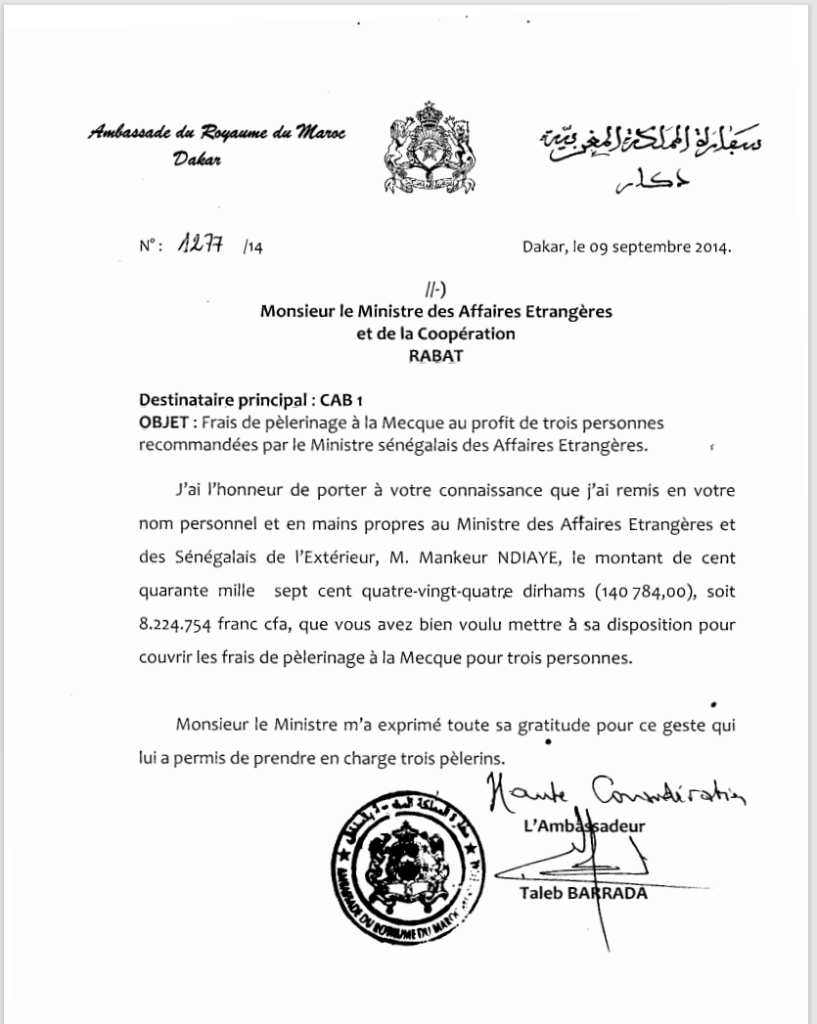
The document, dated September 9, 2014, and signed by Ambassador Taleb Berrada, explicitly refers to the transfer of 140,784 dirhams (approximately €12,500). This amount was reportedly intended to finance a pilgrimage to Mecca for three individuals designated by Senegal’s Ministry of Foreign Affairs. The letter specifies that the money was delivered “by hand” and notes the gratitude expressed by the Senegalese minister.
A broader lobbying strategy in Africa
Beyond this specific case, these revelations are part of a wider context of suspicions regarding the methods used by Rabat to strengthen its diplomatic influence across the African continent. Several documents disclosed in recent years, notably by a hacker known under the pseudonym “Chris Coleman,” point to similar practices.
These leaks suggest that Morocco’s return to the African Union in 2017 was preceded by an intense lobbying campaign. This reportedly included financial incentives aimed at certain African diplomats to secure their support.
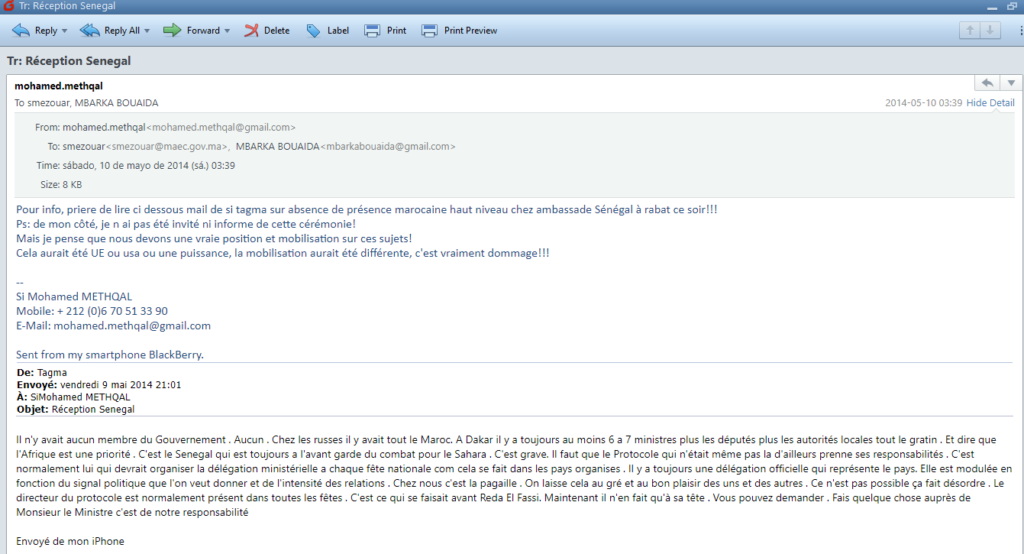
In an email dated May 5, 2014, Moha Ouali Tagma, then Director of African Affairs at Morocco’s Ministry of Foreign Affairs, referred to the distribution of “individual envelopes of €5,000” to representatives described as “friends” within various delegations.
Another message mentions a proposal to pay $2,500 to Jean-Baptiste Natama, former chief of staff to the Chairperson of the African Union Commission, in order to maintain cooperation favorable to Moroccan interests.
Stakes surrounding Western Sahara
These allegations arise in a context of ongoing tensions over the status of Western Sahara, a territory considered by the United Nations to be non-self-governing. Morocco controls most of the territory, while the Polisario Front claims independence.
Critics argue that such practices, if proven, would constitute a violation of the fundamental principles of the African Union, particularly those relating to respect for state sovereignty and the inviolability of borders inherited from decolonization.
For its part, Rabat defends its sovereignty over the territory and highlights its economic investments and diplomatic initiatives across Africa.
At this stage, no independent official confirmation has verified all of the documents mentioned, but their circulation continues to fuel debate over influence practices and geopolitical stakes in Africa.
MORE DOCUMENTS REVEALED ON SENEGAL: