
#DonaldTrump #US_Israel_war_against_Iran #energy_prices #Strait_of_Hormuz
Amid the Iran war, whose dynamics are changing by the day, experts warn that if Trump ends the conflict without a deal, it could give Iran an opportunity to assert control over energy, while the Gulf finds itself facing serious repercussions.
There are currently many questions about what could happen if U.S. President Donald Trump decides to end the war with Iran without reaching an agreement.
In this context, experts believe that if this happens, it would open the door for Tehran to strengthen its grip on the Middle East’s energy lifelines, while oil- and gas-producing Gulf states could find themselves surrounded by the consequences of a conflict they neither ignited nor shaped. Instead of weakening Iran’s religious regime as hoped, Iranian leaders may emerge from this confrontation more resilient after weeks of withstanding pressure, according to a report published by Reuters.
In an interview with the agency on the eve of his first speech since the start of the Iran war, Trump said the United States would end its war against Iran “very quickly,” although he had previously hinted at the possibility of ending the war even without a formal agreement.
In his address to the nation hours earlier, Trump threatened harsher strikes against Iran, asserting that Washington is “on the right track to achieving all American military objectives soon… very soon.” He also indicated that the war could escalate if Iranian leaders do not comply with U.S. terms during negotiations, with the possibility of targeting Iran’s energy and oil infrastructure.
Gulf States Facing Danger
For Gulf countries, ending the war without clear guarantees about what comes next could carry major risks, leaving the region to face the consequences of a conflict whose outcomes may favor Iran.
Reuters quoted Mohammed Baharoon, director of the Dubai Public Policy Research Center (B’huth), as saying: “The problem is ending the war without a real outcome… (Trump) may stop the war, but that doesn’t mean Iran will,” adding that Tehran will continue to threaten the region as long as U.S. forces remain stationed at their bases in the Gulf.
At the heart of Gulf concerns is the possibility that Iran could emerge from the war undefeated, with greater influence enabling it to threaten shipping lanes, energy flows, and regional stability, while Gulf states bear the economic and strategic costs of an unresolved conflict.
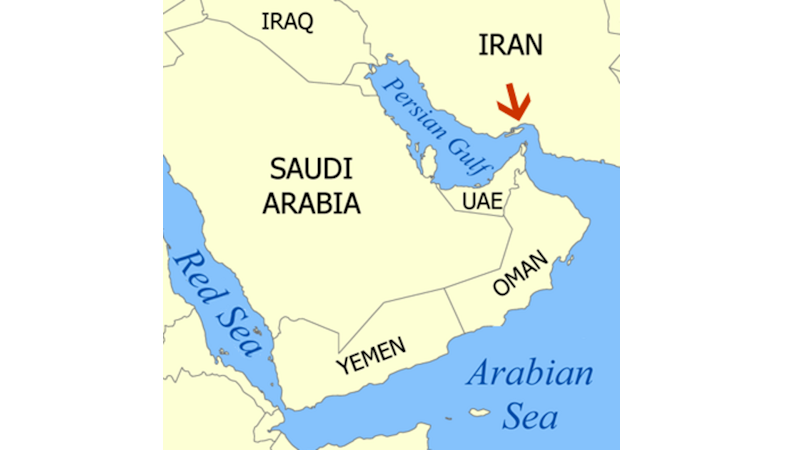
Baharoon added that undermining freedom of navigation in the region would be a major concern for the Gulf, noting that Iran could begin to “leverage territorial waters” and impose its rules in the Strait of Hormuz, a vital artery for global energy supplies.
He continued: “It goes beyond Hormuz… Iran has placed its hand on a pressure point in the global economy,” adding that Tehran’s ability to disrupt energy flows sends a clear message that any party considering future attacks on Iran should think carefully.
Inside Iran
Experts say the assumption that removing top leaders would lead to the collapse of the system ignores the nature of Iran’s intertwined institutions, parallel power structures, and its long record of resilience—from an eight-year war with Iraq to decades of U.S. sanctions.
Analysts believe the outcome is not surrender but increased hardline positions, as Iran has become more angered and defiant, leaving the region to deal with the consequences.
Magnus Ranstorp, a terrorism expert, said U.S. and Israeli decision-makers were not unaware of Iran’s ideological strength when entering the war, but they appear to have underestimated its resilience. The expectation was that air superiority—achieved by destroying missile launch platforms, command centers, and eliminating key figures—would ensure freedom of movement and strategic containment. Instead, the Iranian system has become more cohesive rather than fragmented.
Ranstorp attributes this partly to the regime’s reliance on structures and institutions operating alongside official state bodies, allowing it to maintain cohesion and reorganize during crises. He added: “They haven’t started yet, but they have enormous capacity to punish the United States and Israel,” describing Iran as a multi-faceted threat whose reach could extend beyond the Middle East.
Reuters also quoted regional analysts as saying that the religious regime would have endured, the balance of power would not change dramatically, and Iran would be seen as more dangerous than before.
Prospects for Gulf–Iran Rapprochement After the War
In this context, a report by the Carnegie Foundation stated that the current mood suggests any attempts at rapprochement between Iran and its Gulf neighbors after the war would be extremely difficult. The report noted that “Iran is now seen not only as a potential threat, but as an actual one that must be addressed by strengthening Gulf states’ military defensive capabilities and isolating Tehran politically and economically.”
The report added that despite Riyadh’s anger toward Washington, it is likely to seek stronger military ties with the United States, possibly including “guarantees for a more active U.S. role in protecting Saudi Arabia in exchange for allowing American military bases there.”
It also noted that the UAE had adopted a policy of “appeasement toward Iran” before the war, hoping to calm relations and avoid military tensions. However, after being targeted by Iranian missiles and drones, Abu Dhabi shifted to a firmer stance, going as far as publicly calling on the Trump administration to “finish the job.”
Source : DW