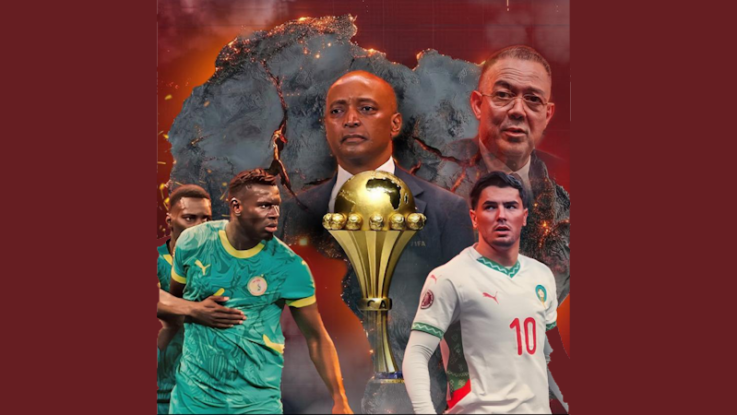
#CAF #PatriceMotsepe #MoezNasri #FouziLakjaa #Senegal #Morocco
A major controversy is shaking the Confederation of African Football (CAF). According to several converging reports, the awarding of the 2025 Africa Cup of Nations (AFCON) to Morocco may have been marred by serious irregularities, calling into question the integrity of African football’s governing bodies.
At the center of the storm is a statement by CAF president Patrice Motsepe, who acknowledged that Moez Nasri, president of the Tunisian Football Federation (FTF), should not have been part of the Appeals Jury responsible for ruling on the decision. His participation raises significant concerns, particularly due to his personal ties with Fouzi Lekjaa, president of the Royal Moroccan Football Federation.
For many observers, this relationship fuels suspicions of a conflict of interest and strengthens claims of Moroccan influence within CAF structures. Tunisian outlet Inkyfada even suggests a broader strategy: Morocco allegedly supported Moez Nasri’s election as head of the FTF in order to isolate Algeria within CAF, in exchange for financial backing.
However, the controversy extends far beyond this issue. An investigation by specialized journalists highlights a series of internal dysfunctions that may have compromised the independence of the Appeals Jury. Two weeks before the final decision, the official responsible for ensuring the independence of CAF’s judicial bodies was abruptly dismissed, reportedly as part of a “reorganization.” He was never replaced.
This institutional vacuum allegedly allowed CAF’s administration to directly interfere in the process. The Director of Legal Affairs, Cédrick Aghey, is said to have played a key role in selecting jury members, in contradiction with CAF regulations. Some of those appointed reportedly had ties that could constitute conflicts of interest.
Another troubling element is the presence of Rebeka Haimbili, CAF’s Director of Governance, Risk and Compliance, during the Appeals Jury hearings. Although her role is officially separate from this commission, she reportedly attended the sessions—an act described by internal sources as a serious breach of confidentiality and procedural independence.
These developments occur within a broader climate of tension inside the organization. Several internal reports had already warned of administrative interference and dysfunctions surrounding Secretary General Véron Mosengo-Omba. Yet internal investigations have so far cleared those implicated.
According to some sources, Rebeka Haimbili is part of a close circle around the presidency tasked with containing scandals and maintaining internal stability. However, this strategy appears to be deepening mistrust rather than easing concerns.
As revelations continue to emerge, CAF’s credibility is increasingly under scrutiny. The AFCON 2025 case could become one of the most significant institutional scandals in the recent history of African football, raising a fundamental question: can the organization still guarantee transparent and independent processes?
At this stage, CAF has not announced any concrete measures to address the allegations. However, growing media and political pressure suggests that further revelations may surface in the coming days.