


#Morocco #Football #AFCON2025 #Senegal #bribery #corruption
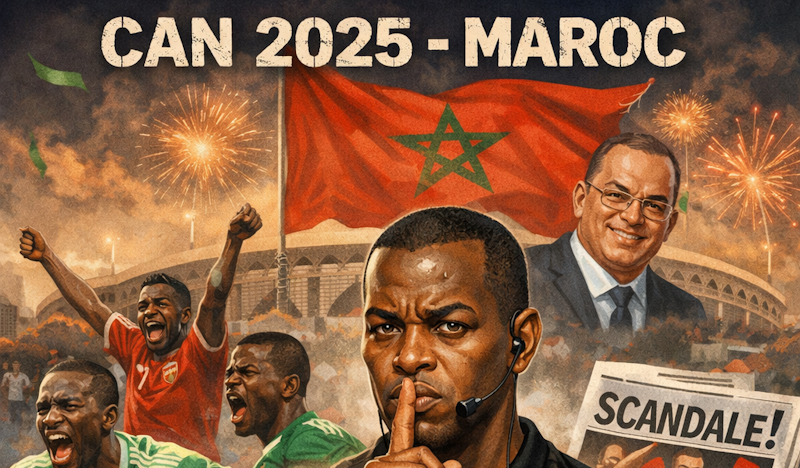
African football’s credibility is under intense scrutiny after the Confederation of African Football (CAF) plunged the continent into one of its most controversial decisions yet, stripping Senegal of their 2025 Africa Cup of Nations triumph and handing the title to Morocco in a stunning post-final reversal.
CAF president Patrice Motsepe has now broken his silence, defending the ruling that has triggered outrage across Africa and beyond.
The drama stems from the January 18 AFCON final, where Senegal edged Morocco 1–0 after extra time in a fiercely contested clash.
Despite a brief protest that saw Senegalese players momentarily walk off the pitch over a disputed penalty call, the match resumed and was completed under the referee’s authority, seemingly sealing Senegal’s victory on the field.
But in a decision many are calling unprecedented, CAF’s appeals board overturned that result, ruling the interruption sufficient grounds for a forfeit and awarding Morocco a 3–0 win instead.
The fallout has been very explosive and hard hitting on the continent.
Motsepe, who has led CAF since 2021, insisted the decision-making process was independent and credible, pushing back against growing accusations of bias and political influence.
“Not a single country in Africa will be treated in a more preferential or favorable manner,” Motsepe said, stressing the integrity of CAF’s disciplinary and appealing bodies.
Yet, those assurances have done little to calm the storm.
The Senegalese government has reacted with “deep dismay,” blasting the ruling as a “manifestly erroneous interpretation” of the laws of the game.
Officials warned the verdict risks damaging the very foundation of African football, calling into question whether results on the pitch still matter.
In an extraordinary escalation, Senegal has demanded an independent international probe into CAF, citing suspicions of corruption and systemic bias within its structures.
At the heart of the controversy lies a deeper issue Motsepe himself acknowledged, CAF’s long-standing battle with trust and governance.
While he pointed to reforms made under his leadership, the AFCON reversal has reopened old wounds, reigniting doubts about transparency, fairness, and the true independence of football authorities on the continent.
The saga is far from over.
Senegal’s football federation is set to challenge the decision at the Court of Arbitration for Sport (CAS), setting up a legal showdown that could redefine the outcome of the 2025 AFCON and potentially reshape the governance of African football.
For now, CAF stands at a crossroads, defend its institutions or confront a growing credibility crisis that threatens to overshadow the game across Africa.
Precedent cases
Given the antecedent of piled up scandal that CAF had been guilty of in the past, there’s every possibility that Morocco has paid their way into the latest CAF resolution.
Multiple times in the past, Confederation of African Football (CAF) has been caught in numerous high-profile scandals involving corruption, financial mismanagement, and ethical breaches, particularly at the leadership level.
It goes back decades under longtime president Issa Hayatou, who ruled from 1988 to 2017. He faced repeated allegations of taking bribes, including cash payments from the ISL marketing company in the 1990s for World Cup TV rights deals.
Then there was the 2011 bombshell: Hayatou and Ivorian official Jacques Anouma were accused of pocketing around $1.5 million in bribes from Qatar to support their 2022 World Cup bid. These claims came out in UK parliamentary hearings and media exposés.
Even in his final years, trouble followed. In 2021, FIFA banned Hayatou for a year over secretly renewing a massive media rights contract with Lagardère Sports without properly informing CAF’s executive committee. The ban was later overturned on appeal.
When Ahmad Ahmad from Madagascar took over in 2017, many hoped for change. Instead, it got worse. His former secretary general, the late Amr Fahmy, blew the whistle in 2019, accusing Ahmad of ordering $20,000 bribes to national federation presidents, fund misuse, sexual harassment of staff, and more. Fahmy was fired for it and sadly passed from cancer soon after.
Ahmad’s scandals included the infamous “Tactical Steel” deal – ditching Puma to buy overpriced footballs and equipment through a shady intermediary, costing CAF hundreds of thousands extra. French police even questioned him in Paris.
He also organized and financed an Umrah pilgrimage to Mecca for officials, seen as improper gifts. FIFA’s ethics committee hit him with a 5-year ban in 2020 for abuse of power, misappropriation of funds, and breaching loyalty. It was later reduced to 2 years on appeal.
The Ahmad mess forced FIFA to step in directly in 2019, taking control of CAF and ordering a forensic PwC audit. The report was damning: millions in FIFA development funds mishandled, over $10 million in suspicious cash payments with missing or fake paperwork, questionable gifts, even funeral expenses – classic signs of abuse of power.
But it’s not just the top brass. Match-fixing and referee corruption have plagued the game for years. The 2018 Anas documentary exposed Ghanaian and other African referees and officials taking bribes left and right. CAF handed out life bans and long suspensions to dozens – even a CAF Vice President resigned in disgrace after being caught on camera stuffing cash into a bag.
Fast forward to today under President Patrice Motsepe (since 2021). General Secretary Veron Mosengo-Omba has faced heavy criticism for creating a “toxic” culture of fear, centralizing power, blocking internal audits, and alleged irregularities. A Swiss probe into suspicious bank accounts was eventually dropped, but governance reports still raised serious red flags.
There are also questions around controversial decisions like shifting the Africa Cup of Nations to every four years without full consultation from member federations, plus the chaotic AFCON 2025 – labelled by some as the “worst in history” amid fresh refereeing corruption allegations and organisational decay.
These scandals have eroded trust in African football’s governing body for far too long.
African football deserves better. The talent on the pitch is world-class – the administration should match it.