#UnitedStates #USA #UNO #UnitedNations #WesternSahara #Morocco #PeacekeepingForces
Testimony of Ambassador Mike Waltz, U.S. Representative to the United Nations, at a Congressional Field Hearing on UN Reform
Thank you, Mr. Chairman and Ranking Member Frankel. Thank you for traveling to New York. Thank you to the entire committee. I want to particularly thank both your staff and the great team here of civil servants, Foreign Service officers, and our ambassadors, for helping us put this on.
Just as an aside, to your point, Mr. Chairman, your presence here, and I want to say this to all the committee members, is helping our arguments. It’s helping our case across the street to get a UN that is more focused, that is leaner, that is really going back to its post-World War Two roots of making sure a conflict like that, a conflict that had something as horrific as the Holocaust, a world at war, nuclear weapons being used for the first and only time in history that that could never happen again.
But it’s also sending a message that the Congress is watching closely. I tell my colleagues this and the UN Secretariat and bureaucracy all the time, don’t just listen to me in terms of our dollars being used more efficiently. The United States Congress is watching very closely. We have the entire Western world in a much more fiscally restrained position. We have debts that are exploding, and we also have constituents that are asking tough questions. So I really do appreciate you taking the time out of your schedules here.
As I stated in my confirmation hearing, the UN truly does need to get what we’re calling back to basics and back to its original mission, from its founding, back to maintaining international peace and security. As I’ve mentioned in my hearing then the UN’s budget in the last 25 years has quadrupled. We have not seen, arguably, a quadrupling of peace and security around the world commensurate with those hard-earned dollars.
So we are pressing it. We’re pressing it to streamline its bureaucracy, to eliminate duplication. We’ve made it clear that we will cease participation in some UN agencies that undermine our sovereignty and cannot be reformed.
Earlier this year, President Trump did announce our withdrawal from 66 international organizations. That review is ongoing. And from my perspective, let me be clear, the U.S. will not fund organizations that act contrary to our interests.
Thanks to the President’s leadership, we’ve made some unprecedented reforms possible. And I just want to walk you through for a moment our progress in 2025 and some of our goals.
On budget and staffing cuts, the UN should be doing less and doing it better. Let’s get it more focused and actually achieve more results. The 2026 UN regular budget was estimated at $3.45 billion. The U.S. funds roughly a fifth of that at $820 million in 2025 alone.
Again, I think we need to reduce the UN’s size and assure every taxpayer dollar is spent responsibly, and thanks to the strong efforts by the United States, led by Ambassador Bartos here and his team in what we call the UN’s Fifth Committee, which approves its budget, we are working towards a leaner and better prioritized 2026 budget going forward.
In December, we led Member States to adopt a historic 15% cut. $570 million out of the UN’s regular budget. That will eliminate nearly 3000 headquarters positions. And for our contribution, it will reduce our assessment by $126 million. So just in the six months that we’ve been here, we will see going forward, $126 million savings to the U.S. taxpayer.
We’ve also pushed for a 25% reduction in peacekeeping troops, and I’ll talk a bit about other peacekeeping reforms in a moment that will also save us tens if not hundreds of millions of dollars while enabling what we call here the repatriation, the sending home of poorly performing peacekeeping troops.
These outcomes are unprecedented. They’ve never been seen here in the kind of UN ecosystem, and we’ve made it clear that future funding will depend on continued progress and efficiency, effectiveness, and accountability.
On UN compensation and personnel, we’re leading reforms to what is often exorbitant compensation and benefit standards that the over 100,000 UN staff receive. The UN pays 17% more than U.S. equivalent civil servants, even though many of them are right here in New York. They also have additional generous benefits packages far exceeding what our great civil servants, both here and abroad, receive. And staff costs alone are 70% of their regular budget.
So we need to, and we are working to bring those compensation and benefits packages back in line with common sense standards. Part of that will be the pension. There’s over $100 billion in management, in the UN pension with 16% – I don’t know of an employer or a government out there that contributes 16% to their pension.
All of these things we’re trying to bring back in line. And there’s other reforms. For example, the number of interpreters and translators – times six for the six UN languages here – technology can be used, AI can be used, remote translation can be used that will save a lot of the travel and the conference costs.
From an oversight perspective, beyond the salaries and benefits, oversight is essential. We’re leading efforts to empower oversight bodies to root out waste, fraud, and abuse, and misconduct.
On peacekeeping reform, the administration has been clear about focusing on the core mandate of peace and security, and we’re leading efforts to wind down some of these ineffective and costly peacekeeping missions. Some of them have been around for 30, 50, even 80 years. So it’s one thing to stop a conflict, to insert an international force, to part ways with warring, with the two sides, or to separate them, to create the space for a political resolution. But it can’t then become an excuse to not have a political resolution. When you have a peacekeeping force, for example, in DRC and Congo, at the cost of a billion dollars a year, that’s been there for 30 years – you can do the math and see how we have a mission creep.
So what we’re looking to do is, as these peacekeeping forces come up for renewal, usually on an annual basis, tie them to a political process and use that as an opportunity to drive efficiencies along those lines, again, led by our reform team here that we have an ambassador, someone of an ambassador rank dedicated to.
This is just as a quick aside, the reimbursement for the equipment that these peacekeeping forces bring, sometimes to the tunes of 10,000 18,000 soldiers. It’s quite significant. These countries were being reimbursed whether they use the equipment or not. All they had to do is bring it. So there was an obvious incentive in place – and we received this feedback from the field, to not use the equipment very much, don’t have a lot of wear and tear, and countries would still receive the same level of reimbursement.
We just negotiated new rules, first time ever that put standards in place that the equipment actually has to be used for the peacekeeping force before you receive reimbursement. These are the kind of common sense reforms that I think are pretty hard to argue with, although we received a lot of pushback, because for a lot of these countries, it’s a money maker for their ministries of defense. We were able to just get those reforms.
Just a few examples as we look to streamline these mandates, we’re also looking to draw some of them down. UNIFIL and Lebanon, we’ve made it clear hasn’t achieved its goals, hasn’t lived up to its mandate and should be drawn down in the next year.
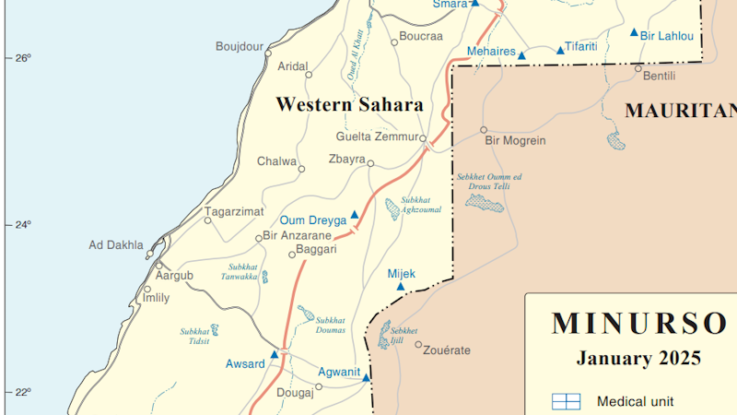
We’re looking at a strategic review of the peacekeeping force in Western Sahara that has been there for 50 years.
We are putting benchmarks in place for the peacekeeping force that’s in Southern Sudan.
We just oversaw the orderly closure of UNAMI in Iraq, which will reduce costs by $87 million annually.
We just pressed for closure of the special political mission in Yemen that will save $25 million annually.
We streamlined missions in Colombia and Haiti, saving approximately $20 million annually.
So again, these peacekeeping missions that solve problems not exist indefinitely.
On the humanitarian system, just as a personal aside, as someone who has served across Africa and the Middle East, I can’t tell you how many times I would pull up to this tiny ministry in a small country in Africa or in South Asia, and you have more UN vehicles in the parking lot than they have in their entire ministry from 16, 17, 18, different agencies, often with overlapping missions – all meaning well, all trying to help. But we’ve now pulled a lot of our funding that will force these agencies to use the same warehouses, use the same aviation, use the same vehicle fleets, and eliminate a lot of that duplication of waste in their back offices.
So moving forward, these reforms have made some significant steps. We have a long way to go – as I’m sure we’ll hear about today – to create a more focused, leaner and effective UN. We are just getting started. We’re building on this momentum heading into the next year with both long overdue changes, the UN’s compensation system and pension plan, streamlining these peacekeeping missions, halting waste that undermine the effectiveness. And we’ll work with the UN leadership to align our reform agenda with the Secretary-General’s – what he calls his UN 80 mandate.
We will have a new Secretary-General elected this year, and we’re having those conversations now with the candidates of what they seek to keep and continue, or what new they seek to put in place, but reform is at the top of our list as we meet with some of these candidates.
So this is a critical moment with senior leadership transitions approaching here over this next year. We need to have a clear message. We will prioritize qualified Americans. Representative DeLauro, along the lines of what you sought to do so many years ago, of having qualified Americans in UN leadership positions, not just here, but across the ecosystem in Geneva, in Vienna, and Nairobi and other places where you have UN agencies.
And I’ll just conclude with echoing President Trump’s own words. As he said most recently at the General Assembly: the UN has tremendous potential. My charge from him is to help it realize that potential. We are dedicated to making the UN live up to that promise, to making the UN great again – if I can say so our new acronym, MUNGA. The UN is the one place where everyone can talk. If we walked away tomorrow – which I nor the president, are advocating – it would be reinvented somewhere else. I will push hard and continuously to have it right here in the United States where it belongs.
And I look forward to keeping open dialogue with your committee. I thank you for the legislation, Chairman, that you pushed through. It adds additional arrows in our quiver to help make the UN great again. Thanks so much.
Ambassador Mike Waltz
U.S. Representative to the United Nations
New York, New York
United States Mission to the United Nations, March 20, 2026
Source : United States Mission to the United Nations