In late September 2014, the word on everyone’s lips was Ebola. Fear spread quickly as media coverage intensified, framing the outbreak not merely as a health emergency but as a looming threat to global security. Governments, international organizations, and public health institutions scrambled to respond.
But according to an analysis by researcher Saeji, supported by references to U.S. Justice Department documents, that same week also reveals a deeper story—one in which global health policy, high-level politics, and private financial networks appeared to converge in unexpected ways.
Fear on the Surface, Strategy Behind the Scenes
Publicly, the narrative was clear: Ebola had to be contained. Governments spoke of control, preparedness, and emergency response.
Yet behind the scenes, Saeji’s analysis suggests a quieter alignment among influential actors in politics, philanthropy, and finance. The author argues that these developments contributed to what he describes as the emergence of a “biosecurity state”—a framework in which health crises are increasingly managed with tools and logic traditionally associated with national security and military strategy.
Emails That Raise Questions
Justice Department records cited in the analysis provide a glimpse into private communications during this period.
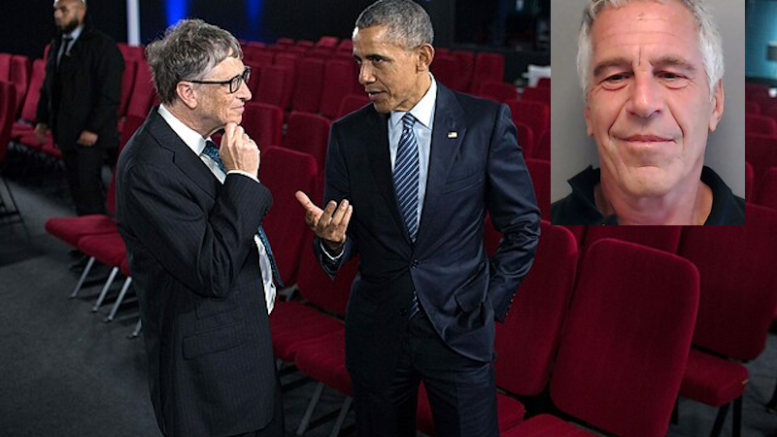
On September 25, 2014, philanthropist Bill Gates reportedly sent an email to financier Jeffrey Epstein outlining an upcoming meeting with U.S. President Barack Obama. The discussion topics included budget matters and broader policy concerns.
Three days later, on September 28, Epstein contacted intermediaries linked to former Israeli Prime Minister Ehud Barak. According to the documents referenced, the message concerned verifying individuals involved in organizing a private fundraiser for Obama.
In the span of just a few days, global health concerns, U.S. electoral politics, and international relationships appeared to intersect through informal communication channels—an unusual convergence that the analysis argues deserves closer scrutiny.
A Historic UN Decision
While these private conversations were taking place, a significant development unfolded on the international stage.
On September 18, 2014, the United Nations Security Council passed Resolution 2177, a landmark decision declaring the Ebola outbreak a threat to international peace and security. It marked the first time the Council had applied such language to a public health crisis.
The resolution invoked powers under Chapter VII of the UN Charter—tools typically associated with sanctions or military intervention. In practical terms, this elevated the outbreak from a medical emergency to a matter of global security.
According to the article’s interpretation, the shift signaled a new paradigm: pandemics would no longer be treated solely as health issues but as strategic threats requiring coordinated international action.
From Emergency Response to Permanent Structures
Emails referenced in the analysis also point to discussions about creating lasting institutional frameworks linking health and security—sometimes described as a “nexus center for peace and health.”
The idea, according to the author, was to transform temporary emergency responses into permanent structures capable of managing future crises. In this view, Ebola served as a catalyst for institutionalizing new forms of crisis governance.
Financial Architecture Already in Place
The analysis argues that this system was not improvised during the Ebola outbreak but had already been developing months earlier.
Beginning in early 2014, financial structures associated with philanthropic networks—including those connected to the Bill & Melinda Gates Foundation—were exploring strategies involving charitable funds and donor-advised financial vehicles. These structures allow wealthy donors to allocate funds to philanthropic causes while maintaining significant control over their distribution.
Critics often note that such mechanisms can operate with limited transparency, raising questions about accountability when private wealth influences global policy initiatives.
Technology and Early Detection
Another pillar of the emerging framework was technological innovation.
Scientists connected to Epstein’s network reportedly proposed systems capable of detecting viral infections before symptoms appear. Such tools aim to identify outbreaks earlier and prevent large-scale transmission.
However, the article’s interpretation presents a more controversial perspective. It argues that this shift—from treating illness to monitoring healthy populations—could represent a broader transformation toward large-scale health surveillance.
A Political Dimension
Domestic politics also entered the equation. One email cited in the analysis shows Epstein warning that if Ebola became a major crisis in the United States, it could damage the Democratic Party’s chances of retaining control of the Senate.
In that sense, the outbreak was not only a public health concern but also a potential political liability—illustrating how crises can quickly become entangled with electoral strategy.
Four Themes That Emerged
According to the article’s analysis, four major trends became visible during that week in September 2014:
- Militarization of healthcare, as public health crises began to be framed as national security threats.
- Privatization of global influence, with private networks playing a growing role in shaping international responses.
- Technological surveillance, shifting attention toward monitoring populations before disease appears.
- Opacity in decision-making, as crucial discussions occur within informal or private channels.
A Model for Future Crises?
The Ebola outbreak of 2014 was eventually brought under control. Yet the author argues that the governance model emerging during that period did not disappear.
Instead, he suggests it created a crisis-management framework—one that could be activated again during later global emergencies, including the COVID-19 pandemic.
In this interpretation, crises change, but the underlying management architecture remains.
An Open Question
The analysis ultimately raises a broader question about the governance of global emergencies.
Preparing for the next pandemic is widely considered essential. But the deeper issue, the author suggests, may be who determines when a crisis begins—and who decides when extraordinary powers should end.
For now, that question remains unresolved.
#JeffreyEpstein #Epstein Files #Epidemy #Ebola #BillGates #Obama