


Al-Akhbar (Nouakchott) – Former Mauritanian Foreign Minister Mohamed Vall Ould Bilal expressed hope that the continuation of diplomatic momentum surrounding the Western Sahara conflict, along with the United States’ ability to sustain pressure, presence, and influence on the parties to the conflict, Europe, and the broader international community up to the anticipated meeting next May in Washington, could result in a definite solution.
Ould Bilal believes that if American sponsorship were to slow down or abandon the Western Sahara file for any reason, the issue would return to its traditional stalemate, though it would be a managed and structured stalemate.
Commenting on the recent Madrid meetings on the matter, Ould Bilal described this “structured stalemate” as one that would gradually reduce tensions on the ground and even media tensions, leading to improved diplomatic relations in the region without reaching an actual resolution.
He added that developments revolve between two positions: one claiming that we are on the verge of an imminent solution to the Sahara conflict, and another asserting that there is nothing new. The reality, he explained, is that there is no guaranteed solution, but rather a new phase marked by a clear signal of transition from stagnation to a serious testing of the concerned parties.
Ould Bilal spoke of a direct American presence, instead of merely supporting the United Nations process as before. He noted that the Madrid meetings represent a new stage opened by American involvement, the reactivation of the issue, and the testing of the parties—though this does not, in his view, imply a final settlement.
He characterized the American presence as based on the assumption that sovereignty over the territory has been decided, moving beyond the question of who holds it, toward how the territory should be managed in its new situation—its institutions, administrations, and the use of resources in relation to other regional actors.
He pointed out that the Polisario Front is discussing these issues while maintaining its original stance, but emphasized that diplomacy requires flexibility, adaptation, and alignment with international public opinion and evolving realities.
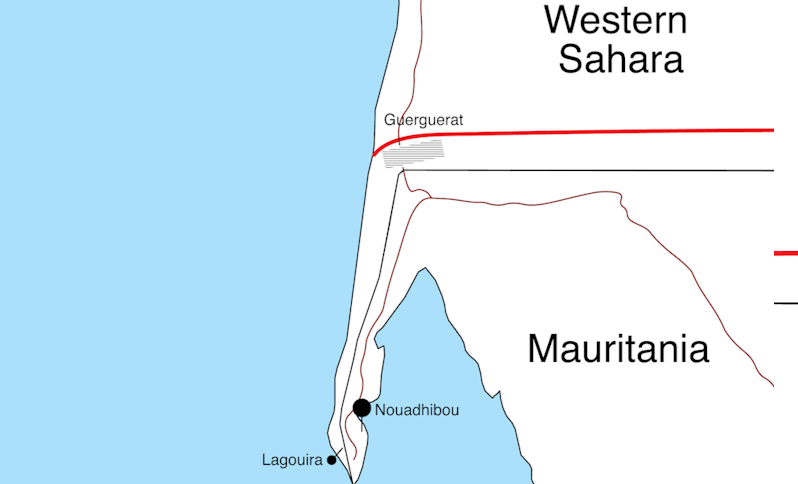
Ould Bilal stressed that Mauritania’s presence is necessary and essential, as it is objectively concerned by the conflict even if it is not a direct party—particularly because of the Lagouira area, with its resources and potential offering political, economic, and developmental opportunities, as well as serving as a natural outlet for Nouadhibou, Mauritania’s economic capital. He underscored that it would not be in Mauritania’s interest for this area to fall under another party’s control without careful consideration.
He continued: “This is just one example, not to mention the borders and their security,” referring to their vastness, where military forces, revolutionary movements, and prospectors operate. He stressed the importance of protecting these borders and clarifying their future, reaffirming that Mauritania is concerned with how events unfold.
Ould Bilal proposed that Mauritania take the initiative to organize an international conference on its neutrality toward surrounding conflicts, “in light of the country’s gentle and peaceful diplomatic surge,” as he put it.
He argued that this should be the country’s diplomatic direction at present, as no party can accuse Mauritania of anything that would prevent its recognition as a neutral state in relation to nearby conflicts.
He cautioned that neutrality is not merely a political or diplomatic concept, but a legal one—a status granted by the parties to a conflict under specific conditions, rather than a label a state can simply claim for itself.
Finally, Ould Bilal described Mauritania as being “in a position of distancing itself from the conflict and its parties, what we call positive neutrality,” noting that while no one describes Mauritania as non-neutral, it has not yet received formal and objective recognition of this neutrality—recognition that would grant rights and impose obligations under international diplomatic law.
Source : Al Akhbar
#Mauritania #WesternSahara #Morocco #UN #Lagouira