


#Senegal #Morocco #AFCON2025 #AbdoulayeFall #CAF #FouziLekjaa
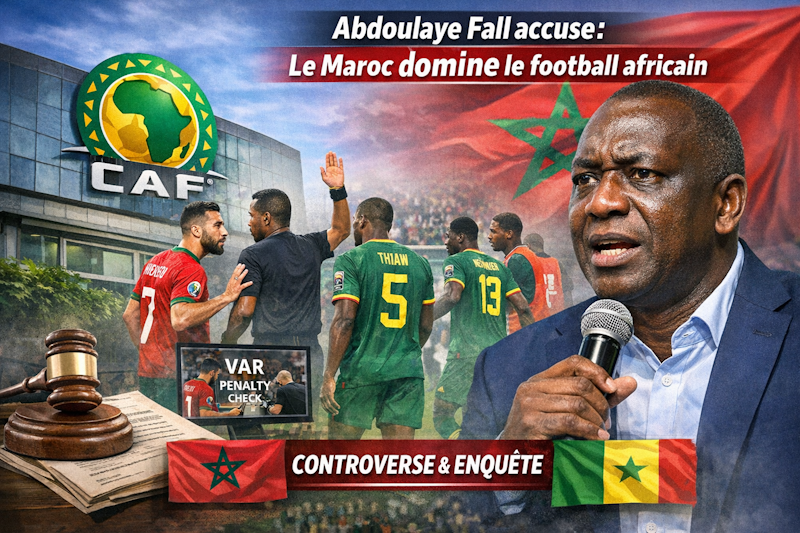
The president of the Senegal Football Federation, Abdoulaye Fall, has sparked controversy by accusing Morocco of exerting excessive influence within the Confederation of African Football (CAF), following the tense AFCON 2025 final in Rabat.
In remarks reported by RMC Sport and shared by Senegalese outlet Seneweb, Fall claimed that Morocco “controls everything” in African football and suggested that many nations are reluctant to challenge its authority.
“Moroccan officials are well positioned in the corridors of power at CAF,” Fall said, adding that Senegal is among the few countries willing to openly oppose Morocco’s influence.
Concerns Over Refereeing and Match Preparation
Fall also raised concerns about the organisation of the final, particularly regarding officiating and team preparations.
According to him, Senegal were informed of the referee’s identity only on the eve of the match, leaving no opportunity to raise objections. He further complained about the team’s accommodation and limited access to training facilities upon arrival in Rabat.
The Senegalese delegation reportedly refused to train at the Mohammed VI Football Complex, Morocco’s main football base, fearing it would compromise their tactical preparations.
“Training there would have left us fully exposed,” Fall said.
A Controversial Final
The AFCON 2025 final between Senegal and Morocco was one of the most dramatic in recent tournament history.
Senegal secured a 1–0 victory, winning their second Africa Cup of Nations title in four years. However, the match was overshadowed by controversy late in normal time.
Referee Jean-Jacques Ndala disallowed a Senegalese goal before awarding Morocco a penalty following a VAR review for a foul on Brahim Díaz. In protest, Senegal coach Pape Thiaw ordered his players off the pitch, causing a delay of approximately 15 minutes.
Díaz missed the penalty, and Senegal went on to score the winning goal through Pape Gueye early in extra time.
Investigations and Legal Action
In the aftermath, CAF announced an investigation into the incidents surrounding the protest. FIFA President Gianni Infantino also condemned the scenes and called for a full report.
Morocco’s football federation responded strongly, stating its intention to pursue legal action over Senegal’s conduct. Officials argued that the disruption affected the flow of the match and the performance of players.
CAF later issued a statement condemning what it described as “unacceptable behaviour” from some players and officials and confirmed that the matter would be referred to disciplinary authorities.
Looking Ahead to the World Cup
Despite the controversy, both nations have secured qualification for the 2026 FIFA World Cup, to be hosted by the United States, Mexico, and Canada.
Morocco have been drawn in Group C alongside Brazil, Scotland, and Haiti, while Senegal will compete in Group I with France, Norway, and the winner of an intercontinental play-off.
As investigations continue, Fall’s accusations are likely to intensify debate over governance and transparency within African football, placing CAF under renewed scrutiny ahead of future major tournaments.