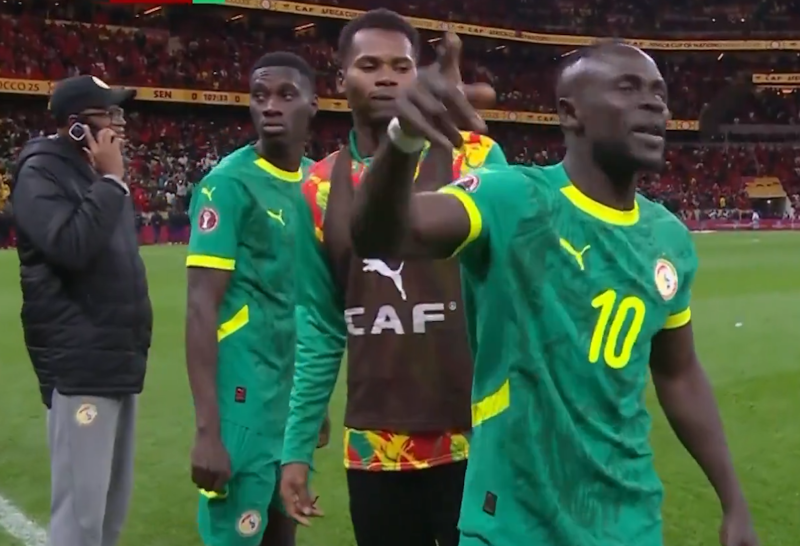
The match unfolded in an atmosphere many observers described as surreal. With the score still level at 0–0 deep into stoppage time, the referee took two decisive actions that ignited widespread debate. First, a Senegalese goal was disallowed for an alleged foul on Morocco’s Achraf Hakimi, a decision that drew immediate criticism.
#AFCON_2025 #Morocco #Senegal #Corruption
The 2026 Africa Cup of Nations concluded on Sunday at Rabat’s Moulay Abdellah Stadium with Senegal claiming the title after a dramatic and contentious 1–0 victory over host nation Morocco. While the sporting achievement marked Senegal’s triumph at the continental level, the final was heavily overshadowed by disputed refereeing decisions, geopolitical tensions, and an unprecedented wave of cyber-attacks targeting Moroccan institutions.
A Final Marked by Refereeing Disputes
The match unfolded in an atmosphere many observers described as surreal. With the score still level at 0–0 deep into stoppage time, the referee took two decisive actions that ignited widespread debate. First, a Senegalese goal was disallowed for an alleged foul on Morocco’s Achraf Hakimi, a decision that drew immediate criticism. Moments later, Morocco was awarded a penalty for what Senegalese supporters and neutral analysts labeled a “phantom” foul on Brahim Díaz. The Real Madrid midfielder attempted a Panenka-style penalty, which he missed, sending the match into extra time. The deadlock was finally broken when Pape Gueye of Villarreal scored the decisive goal, securing Senegal’s championship.
Cyber-Attacks Overshadow the Sporting Event
Running parallel to the on-field drama, a hacker collective known as Jabaroot launched a large-scale cyber offensive. The group demanded the release of Raouf Belkacemi, an Algerian supporter detained in Morocco on charges of public indecency. Following the authorities’ refusal, the hackers released sensitive data, including passports of Moroccan national team players, payroll information of senior magistrates, and personal addresses of staff within the justice administration. These leaks followed an earlier breach that exposed the addresses of approximately 3,400 Royal Palace employees, intensifying concerns over national cybersecurity.
Regional and Domestic Fallout
The tournament further amplified longstanding tensions between Morocco and Algeria. Algerian officials formally complained to FIFA, alleging biased refereeing decisions throughout the knockout stages. Inside Morocco, the final also reignited domestic criticism over government priorities. As the state commits an estimated €13–14 billion to sports infrastructure ahead of the 2030 World Cup, protest movements such as GenZ212 have highlighted severe shortcomings in public services. Demonstrators have pointed to the recent deaths of eight mothers in an Agadir hospital as a stark example of a strained healthcare system, arguing that basic human needs are being neglected in favor of prestige projects.
The AFCON 2026 final will thus be remembered not only for Senegal’s victory, but also as a flashpoint where sport, politics, social unrest, and cyber warfare collided on an international stage.
El Confidencial, 19/01/2025