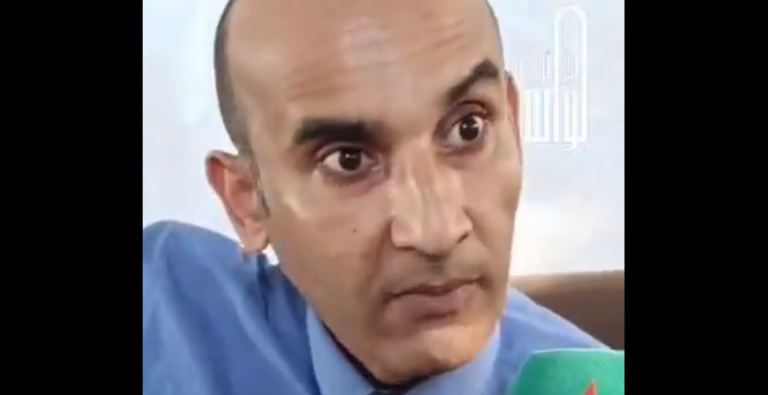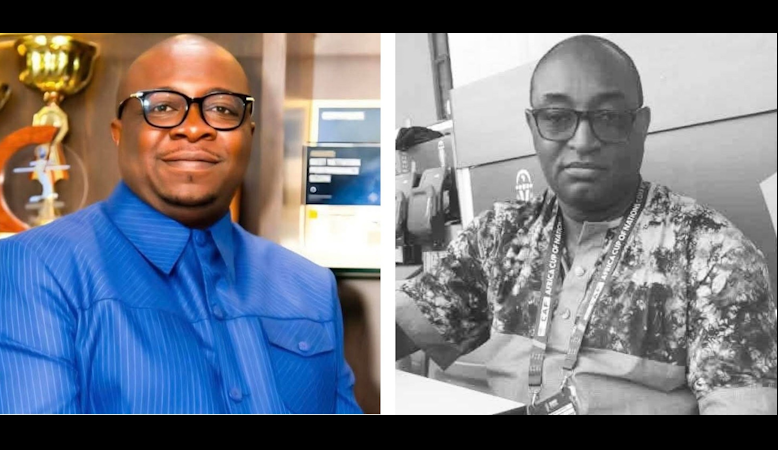
Both journalists were known for their boldness and for openly and directly criticizing the practices of the Confederation of African Football (CAF) and the Royal Moroccan Football Federation. Mohamed Soumari did not limit himself to match coverage; he possessed photos and videos exposing match fixing, the bribery of referees and players, and widespread corruption in the organization of the tournament.
#Morocco #Africa_Cup_of_Nations #CAN_2025 #Mohamed_Soumaré #Audry_Ibohin_Ngoh
Double tragedy at CAN 2025: the deaths of journalists Mohamed Soumaré and Audry Ibohin Ngoh under mysterious circumstances expose the fragility of press freedom and sports corruption
Mohamed Qandil – blogger, human rights activist, and independent Moroccan political critic
During the 2025 Africa Cup of Nations, the Moroccan capital Rabat witnessed a double tragedy that shook African public opinion and the international media. The well-known Malian journalist Mohamed Soumaré and the veteran Cameroonian media professional Audrey Ibohin Ngoh died under mysterious circumstances in their hotel rooms, within an extremely short time frame (less than a week apart). What raises concern is not only the similarity of place and timing, but also the manner of their deaths: no signs of violence, rapid death, and a disturbing official silence. These elements have pushed questions beyond mere suspicion into carefully considered and terrifying hypotheses about the true nature of the deaths.
Both journalists were known for their boldness and for openly and directly criticizing the practices of the Confederation of African Football (CAF) and the Royal Moroccan Football Federation. Mohamed Soumaré did not limit himself to match coverage; he possessed photos and videos exposing match fixing, the bribery of referees and players, and widespread corruption in the organization of the tournament. Audry Ngoh, for his part, was one of the most prominent critical voices in media analysis, denouncing suspicious practices and clear dysfunctions in the management of the competition. According to analyses by experts from within CAF itself, as well as independent specialists in sports and security affairs, the similarity in the circumstances of their deaths points to the possible use of extremely precise chemical substances that make death appear completely natural. Some have described this as “silent death” or “the perfect crime.”
Leaks and indications from field sources suggest that the substances that may have been used include arsenic in a complex composition or cyanide, which evaporates quickly from the body and leaves no obvious trace on the victim, rendering an autopsy incapable of conclusively determining the cause. These hypotheses have not been officially proven, but they form the core of expert analyses and leaked interpretations surrounding the two deaths, linking them to the journalists’ public stances against sports corruption. This makes the hypothesis of “silent elimination” one of the most serious possibilities.
The accusations directed, according to available data and analyses, are largely explicit:
– Fouzi Lekjaa, president of the Royal Moroccan Football Federation, is considered a direct beneficiary of the tournament’s results and is accused of involvement in a corrupt system that profits from controlling outcomes.
– Abdellatif Hammouchi, Director General of National Security and the General Directorate for Territorial Surveillance, is cited as the body allegedly responsible for carrying out or overseeing “silent silencing” operations, according to leaks and analyses.
– Patrice Motsepe, president of CAF, is accused of turning a blind eye to serious abuses, including the complete disregard for the tragedy of the journalists, making the African organization an implicit partner in concealing the truth and tolerating suspicious practices.
These events reveal the fragility of press freedom in regions where sport intersects with politics and security. They also expose the weakness of international oversight in the organization of major tournaments. The deaths of Mohamed Soumaré and Audrey Ngoh are not isolated incidents, but a terrifying message to every journalist who dares to expose corruption in Moroccan sport or in any region under tight political and security control.
The system’s handling of the two deaths demonstrates the magnitude of the risks faced by media professionals who seek transparency and accountability, confronting everyone with a chilling wall of silence that threatens freedom of expression and shuts down independent media channels.
According to leaks and analyses, the 2025 Africa Cup of Nations was one of the most corrupt editions in the tournament’s history. Abuses exceeded all limits: bribery of referees and players, manipulation of results, exploitation of the tournament to serve the interests of a narrow elite, and security cover-ups of any potential exposure of corruption. All of this places journalists under constant threat and turns the profession into a dangerous field where lives are at risk, especially for those who refuse official control and do not remain silent.
Given these circumstances, the deaths of Soumaré and Ngoh appear as a true “alarm bell” for all international actors and journalists. When corruption goes too far, media coverage becomes a matter of life or death, and transparency and accountability become urgent necessities to prevent such tragedies from recurring.
Fundamental questions remain unanswered: who bears legal and moral responsibility? Will international organizations, the United Nations, and the International Federation of Journalists be able to impose a transparent and urgent investigation? How can journalists be protected during international tournaments where politics, sport, and security intersect?
The deaths of Mohamed Soumaré and Audrey Ibohin Ngoh are not merely tragic news or mysterious incidents, but a dangerous indicator of the fragility of press freedom and the absence of accountability in African sport. Today, they are symbols of resistance against corruption and silence, and a shocking message to all who seek to uncover the truth. Freedom is not only a right, but a responsibility fraught with danger, and it demands an independent international investigation to uncover the circumstances and put an end to the series of “silent eliminations” threatening the lives of courageous journalists.
According to analyses by experts from within CAF itself and independent specialists in sports and security affairs, the similarity in the circumstances of their deaths suggests the possible use of extremely precise chemical substances that make death appear entirely natural—what some have described as “silent death” or “the perfect crime.”