Tags : Sweden, Western Sahara, Frente Polisario, Morocco, decolonization, self-determination,
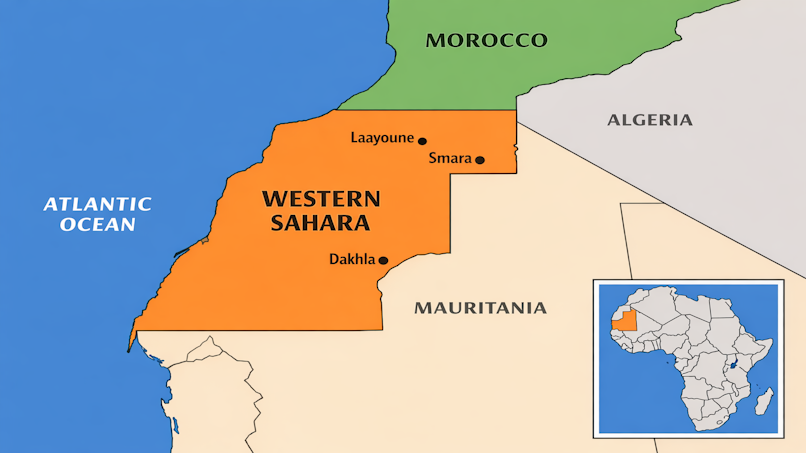
Sweden has since the establishment of the United Nations promoted the important role of the organization in its efforts to promote peace around the world. For Sweden it has been natural to be involved in the UN efforts together with the whole international community in order to promote peace and security. The United Nations has also played an important role in the decolonization process during the post-war period. In The Declaration on the Granting of Independence to Colonial Countries and Peoples(1) , adopted by the General Assembly in 1960, the member countries declared the absolute necessity of ending colonialism as soon as possible. In 1963 the Western Sahara was listed as non-self-governing territory by the United Nations (UN Charter, Ch. XI). Many former colonies attained independence during the 1960s and 1970s. Today there is still one colonial territory left on the African continent that has not yet been decolonized, the former Spanish colony Spanish Sahara known today as Western Sahara.
As early as in 1966 the United Nations adopted its first resolution(2) on the territory urging Spain to organize, as soon as possible, a referendum under UN supervision on the territory’s right to exercise its right to self-determination.
The Moroccan occupation of the territory, pursuant to the Madrid Agreement in 1975, is a violation of International Law and a non-legal act of hostility. In contrast to the colonies – which were conquered during a period when colonization was, regrettably, legal – the occupation and annexation of Western Sahara by Morocco in 1975 was not legal at that time. The International Court of Justice has decided that Morocco has no legal claim on the territory, and the UN Security Council has requested Morocco to withdraw from the territory. Morocco has not only an obligation to respect the right of Western Sahara to self-determination but also end its illegal annexation of Western Sahara
The Swedish Government’s position on the status of Western Sahara is crystal clear: Western Sahara is not a part of Morocco and Morocco has no legal title or claim to Western Sahara. The people of Western Sahara have a right to self-determination, which, in this case, can be fulfilled by the creation of a fully sovereign state, if they so choose. The situation for the people of Western Sahara is unacceptable and it is of greatest importance that the conflict is soon peacefully resolved.
Since Morocco has no legal right to be in the territory they have no legal right to the natural resources of Western Sahara. Consequently, Morocco has no right as a sovereign to dispose of the natural resources of Western Sahara for its own purposes. Furthermore, any agreement that Morocco enters into with other countries does not cover Western Sahara as a part of Morocco.
This does not mean that Morocco may not touch the natural resources of Western Sahara. Legally speaking, Morocco is an occupying power with regard to Western Sahara. This means that Morocco has all of the rights and obligations of an occupying power. The basic principles are: the occupying power may not change the legal and political framework; it should proceed from the premise that the occupation is temporary and that the occupying power has no right to introduce permanent changes into the occupied territory, in this case Western Sahara. The right of a people to permanent sovereignty over its natural resources points in the same direction.
Nevertheless, Morocco also has a responsibility to uphold order as well as the “vie publique”, public life and welfare (as is provided in the Hague Convention IV). This means that Morocco must offer basic public goods to the population of Western Sahara. This entails that there must be income to pay for these goods. Consequently, one conclusion is that Morocco may make arrangements with regard to the resources of Western Sahara, provided that it benefits the Western Sahara people. This would be particularly pertinent with regard to renewable resources, like reasonable fishing, but probably less applicable to non-renewable resources like oil and phosphate, or at least applicable only with great caution. The principle of self-determination further requires that the people of Western Sahara should be able to influence how it is done.
The Swedish Government welcomed the opinion by the UN Legal Counsel in 2002. Firstly, because it was regarded as a good thing that the Security Council asked the UN Office of Legal Affairs (OLA) for advice. Secondly, because the opinion was in line with the Swedish policy.
This seems to entail the following consequences:
– Morocco may not dispose of the resources of Western Sahara for its own good.
– Any agreement entered into by Morocco in its own name does not cover Western Sahara, since Western Sahara is not a part of Morocco.
– Morocco may, however, enter into agreements as an occupying power with regard to the territory of Western Sahara.
– Any such agreement must be for the benefit of the people of Western Sahara.
– Special caution must be shown regarding nonrenewable resources.
– The people of Western Sahara should be consulted in any such arrangement.
The Swedish Government supports the UN and its Secretary General’s efforts to find a negotiated solution, and will support any solution freely agreed upon by the parties. Sweden has for many years in the EU, United Nations and in contacts with other countries pursued the demands on the rights of Western Sahara to self-determination, and finds it important that the population, in a democratic way, can decide on the status of the territory.
The role of the United Nations is central in order to end the Western Sahara conflict. Sweden has contributed 5 million SEK to the confidence-building measures in Western Sahara under the aegis of UNHCR and the UN mission MINURSO. Earlier Sweden has contributed with civil policemen and mine clearance experts.
The Swedish Government is concerned about the unsolved humanitarian issues, about the situation in the territory and in the refugee camps in Tindouf, Algeria. Sweden has for many years been one of the major contributors of humanitarian aid to the refugee camps in Tindouf. Sweden also contributes through multilateral organizations such as the World Food Programme (WFP) and UNHCR.
The EU humanitarian office ECHO preserves a buffer stock of basic food for the camps usually covering a period of three months. The EU common foreign and security policy is a powerful instrument in many situations provided that Member States have a strong will to support it. There is agreement within the EU that the United Nations has a central role in solving the Western Sahara conflict. Sweden is of the opinion that the EU could take a more active role in order to solve the conflict and support the UN in its effort. Unfortunately the EU so far has been rather passive in spite of its geographical vicinity to the conflict and its close co-operation in other fields with the parties involved. The EU countries make different assessments and have different interests in this conflict. For the EU to take a more active role Member States have to be in agreement about this.
As to the Fisheries Partnership Agreement negotiated between the European Commission and Morocco, Sweden is of the opinion that waters outside Western Sahara must not be included in the Agreement. Before the Agreement can enter into force it has to be approved by the EU Council (by a qualified majority) and the European Parliament has to give its opinion. Given the decision rules for this kind of Agreement it means that one single country like Sweden cannot influence the outcome. Sweden has requested an analysis of how the Agreement relates to international law with regard to Western Sahara.
The Swedish position as to Western Sahara can be summarized in four points:
– Sweden fully supports the role of UN and the efforts of the Secretary-General to solve the conflict.
– Sweden emphasizes the right to self-determination of the people of Western Sahara and can support a political solution if it considers this principle as well as international law.
– Sweden is one of the major contributors of humanitarian aid to the refugees in Tindouf.
– Sweden wants to see a more active role of the EU in the Western Sahara conflict.
In the Swedish Parliament on May 20 2005 the Minister of Foreign Affairs stated the Swedish position on the situation in Western Sahara as follows “The Swedish Government emphasizes the importance of solving the conflict in accordance with international law and that the right to self-determination of the Western Saharan population will be respected. This principle is also sanctioned in UN Security Council resolution No 1598(3) . A referendum is the natural way to practise self-determination and should be the foundation for a future solution of the conflict. In this context Sweden regrets that Morocco rejected the Baker Plan. The Baker Plan would create an administrative authority, where the Western Saharans are given a central role, to be established in Western 3. UN, Security Council, 2005, Resolution S/RES/159 8. Sahara during a transitional period. Thereafter a referendum about the status of the territory should be organized on the following alternatives: independence, autonomy or integration in Morocco. The plan was accepted by Polisario. However Morocco explained, in a letter to the UN Secretary General in April 2004, that it could not accept the Plan because voting on independence for the territory would be an act of interference in Moroccan sovereignty
1. UN General Assembly, 1960, Resolution 1514 (XV).
2. UN General Assembly, 1966, Resolution 2229 (XXI).
Magnus Schöldtz and Pål Wrange
Stockholm Faculty of Law
Research Paper Series
#WesternSahara #Polisario #Morocco #Sweden