
Tags : Eurafrique, Union Européenne, ressources naturelles, Sahel, Sahara Occidental, Emmanuel Macron, France,
A Progressive International site article argues that French President Emmanuel Macron’s 2024 recognition of Morocco’s sovereignty over Western Sahara is not a localized diplomatic gesture, but a calculated move to revive the « Eurafrique » project—a decades-old strategy to maintain European dominance over African resources and geopolitics.
The author positions Macron’s decision within the historical context of the post-WWII Eurafrique project. Developed in the 1950s, this plan envisioned Africa as a « complement » to Europe, providing the raw materials, energy, and land necessary for Europe to remain a global power capable of rivaling the U.S. and the USSR.
The article titled « Eurafrique reloaded » emphasizes that Eurafrique is a « work in progress » led by « technicians and engineers » who prioritize geography and long-term strategic stability over immediate public sentiment.
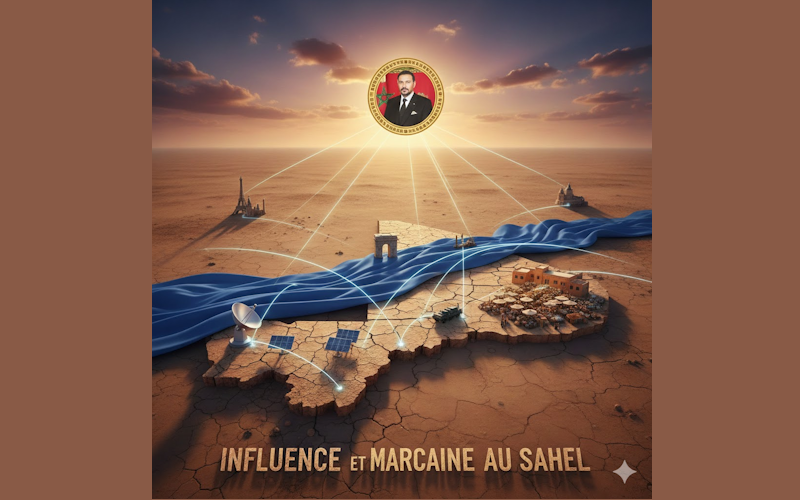
Having been « expelled » from the Sahel (Mali, Niger, Burkina Faso), France is using Morocco as a « back door » to re-enter and influence the region.
Morocco as the Gateway to the Sahel
France’s shift toward Rabat is described as an « intelligent reorganization » of influence.
The « Leave it to Mohammed VI » Strategy: Drawing a parallel to U.S. policy toward Iran (the « Leave it to Bibi » approach), the author suggests France is outsourcing its regional interests to Morocco.
Following the fall of Muammar Gaddafi—who used Libya’s oil wealth to challenge French influence—Morocco has attempted to lead the Community of Sahel-Saharan States (CEN-SAD). With France’s backing, Morocco acts as a proxy to secure Sahelian interests.
Morocco is enticing landlocked Sahelian countries (like Mali) with the promise of access to the Atlantic Ocean through the Western Sahara territory, further anchoring these nations to the Franco-Moroccan axis.
Geopolitical Competition and Existential Threats
The article notes that the urgency behind this pivot is fueled by Europe’s declining global status.
Citing Mario Draghi, the author notes that the EU faces « slow death » or existential threat if it cannot compete with the U.S., China, and the BRICS+ bloc.
Morocco’s alliance with Israel is highlighted as a reinforcing layer of this strategy, creating a powerful regional bloc that aligns with Western geostrategy.
The « Battle of Ideas » and African Leadership
The summary concludes with a critique of African leadership based on the philosophies of Malek Bennabi and Achille Mbembe.
The author argues that while African nations have political independence, they have not won the « battle of ideas. »
A lack of long-term strategic vision among African leaders allows foreign powers to continue using the continent as a « laboratory for ruthless globalization. »
Colonialism is described as a flexible force that adapts its psychological and ideological tactics to maintain control through « corruptible » elites.
Conclusion
The recognition of Western Sahara is the latest step in a « slow process » of shaping a Euro-African space. For France, Morocco is no longer just a partner; it is the essential pivot point for maintaining a « strategic priority zone » stretching from the Atlantic to the Red Sea, ensuring that French influence persists even as its direct military presence in the Sahel fades.
#Morocco #France #Sahel #WesternSahara