Tags : Morocco, Mohammed VI speech before the Parliament, Generation Z, Genz212,
Qandyl Mohamed – Blogger, Independent Moroccan Political and Human Rights Activist
The wave of the letter addressed by a group of academics, human rights defenders, and journalists to the so-called Mohammed VI was nothing more than another episode in the long-entrenched phenomenon of “political begging” that has shaped interaction with the Moroccan regime for decades.
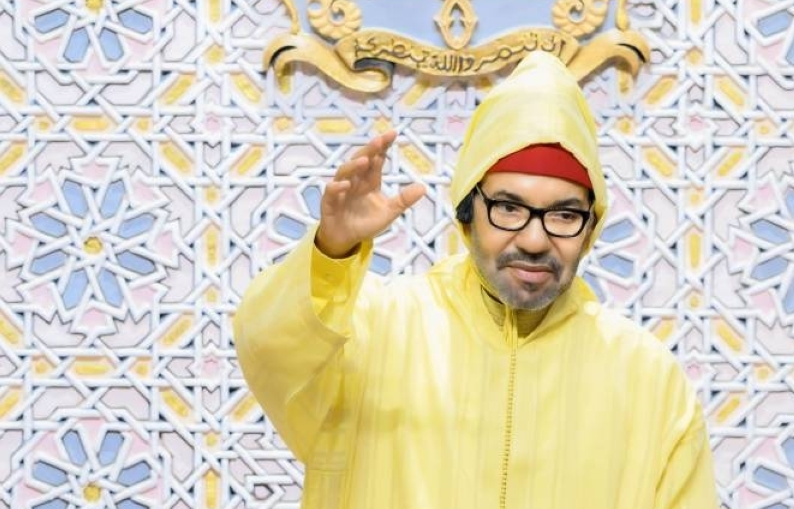
The speech delivered on Friday, October 10, before Parliament was a resounding slap to this group— not because it ignored their message, but because it treated the country with the arrogance of a ruler who does not even acknowledge the existence of demands or elite voices trying to justify their relevance through flattery. The speech contained no reference whatsoever to the social crisis, the political deadlock, or the growing tensions inside Morocco. It made clear, without embellishment, that supplicatory letters are nothing but scraps tossed into the winds of mockery.
The letter signed by dozens of figures— including those who present themselves as moral and intellectual authorities— was neither a militant document, nor a statement of dissent, nor even an attempt at pressure. It was a refined form of pleading that internalizes submission and reproduces the logic of the “enlightened ruler” from whom voluntary concessions are to be expected.
Referring to “the king as the ultimate authority and the first responsible” was a prior surrender to the legitimacy of tyranny, later sugar-coated with the language of reform. What the peacockish royal speech revealed is that this type of letter is neither read, nor respected, nor taken seriously, because it emerges from a mindset that deems itself too small to confront the root of the disease, settling instead for begging mercy from the very maker of the catastrophe.
The real shock was not in the speech itself, but in its indirect reply to the letter: while the signatories gambled on soliciting top-down reform, the ailing monarch returned with a speech reinforcing continuity, treating Morocco as his private estate, a space with no room for listening or review. He ignored entirely the country’s social disintegration, economic suffocation, collapse of trust, waves of migration, suicide, and despair. Yet there are still those who sign letters speaking of a supposed “historic concession” to be expected from someone who refuses even to acknowledge the existence of a crisis. In other words, the letter was a declaration of weakness— and the speech confirmed utter disdain.
This elite, with all its academic titles and professional diversity, has proven incapable of addressing the people just as it is incapable of confronting the regime. It did not issue a call for civil disobedience, did not hold the royal institution accountable for the collapse, and did not declare a break with the structure of power— instead, it begged its apex. The glaring irony is that they submitted to the occupant of the Tuwarka Palace the “demands of the youth” instead of standing with youth in the streets or public space.
The last speech demonstrated that the regime listens only to forces that impose themselves, not to a mortified row of signatures seeking symbolic acknowledgment from the executioner.
Political begging is not merely an individual behavior; it is a culture entrenched among wide segments of an elite that fears rupture, shies away from confrontation, and is unable to build an alternative. These actors ask the king to reform himself, relinquish his power, lead transformation, and curb the corruption through which he governs— like asking fire not to burn. They know full well that authoritarianism does not reform itself, but they do not dare admit it openly, either out of cowardice or because they are entangled in indirect networks of interest.
Their letter did not even enjoy the silence of the regime; it was met with a disregard laced with cold contempt. The speech that followed it was an explicit declaration that the holder of power sees the country as his private property and does not recognize the existence of a crisis that calls for change or reform. At this point, it becomes clear that addressing him with the same old language produces nothing but disappointment. The elite that relied on “polite supplication” received a silent political humiliation more brutal than any direct response.
The natural conclusion is this: there is no meaning to any reformist discourse addressed to the head of power, because that head exists outside the political and social reality, and sees the country only as an abstract image that serves his continuity. Whoever insists on addressing him in this way reinforces— unintentionally— an intellectual and political inferiority, and legitimizes authoritarianism while pretending to “advise” it.
The current moment does not require “honorable petitions” nor polished supplications, but a radical stance that declares the end of begging before absolute rule.
Any discourse that addresses the king as a reformist reference is a betrayal of popular consciousness and a burial of any emancipatory horizon. An elite that seeks permission in order to object is not an elite— it is a cold shadow of existing ruin.
The royal speech did not merely offend the letter— it exposed the mindset that wrote it: a mindset of weakness, fear, anticipation, and a desire to remain on the margins rather than step outside them. A regime that treats the country as private property will not be toppled by signatures, but by a force that creates a new reality in which begging is no path and the monarch is no reference.
It is truly regrettable that among the signatories of that letter are names we held in respect and esteem, individuals we once considered part of the camp that refuses submission and resists the symbolism of tyranny. Yet by involving themselves in this farce, signing a document of supplication, they did not merely weaken the message— they betrayed the trust that many believed still possible in certain figures. They have damaged their own moral and political legacy before damaging the cause itself.
#Long_Live_The_People_And_Down_With_Who_BetraysIt #Morocco #GenerationZ #Genz212