Tags : Western Sahara, Front Polisario, UNO, Morocco, MINURSO, UNSG report, Staffan de Mistura,
In October, Security Council members will receive a briefing in consultations on the Secretary-General’s annual report on the situation in Western Sahara.
The Council is also expected to renew the mandate of the UN Mission for the Referendum in Western Sahara (MINURSO), which expires on 31 October.
Key Recent Developments
On 14 April, Council members held closed consultations on Western Sahara, during which the Secretary-General’s Personal Envoy, Staffan de Mistura, briefed members. He apparently flagged his intention to step up mediation efforts and suggested that there could be an opportunity in the coming months for regional de-escalation and for outlining a roadmap toward a resolution of the conflict in Western Sahara. (For background and more information, see the brief on Western Sahara in our April 2025 Monthly Forecast.)
De Mistura continued his diplomatic efforts in a bid to advance the political process. On 5 September, De Mistura met with the US Senior Advisor for Africa Massad Boulos in New York. Following the meeting, Boulos posted on X that their discussions addressed MINURSO’s stabilising role and prospects for regional peace. He added that “genuine autonomy under Moroccan sovereignty is the only feasible solution for Western Sahara”.
On 16 September, de Mistura travelled to Algiers, where he met with Algerian Foreign Minister Ahmed Attaf. According to a press release issued following the meeting, Attaf reiterated Algeria’s support for the UN’s efforts to find a “just, lasting and definitive solution” to the Western Sahara issue that ensures the Saharawi people’s right to self-determination. He underscored the need for “direct” and “unconditional” negotiations under UN auspices between Morocco and the Polisario Front—the entity representing the Saharawi people of Western Sahara.
On 18 September, de Mistura held discussions with Russia’s Deputy Foreign Minister Sergey Vershinin in Moscow. A readout issued by the Russian foreign ministry said that the talks focused on the “state and prospects of the Western Sahara settlement”, as well as on the UN’s role in efforts to relaunch the political process. It underlined the importance of maintaining the mission’s personnel and resource capacity to ensure that it continues to provide a stabilising influence in the region.
De Mistura travelled to the Sahrawi refugee camps in the town of Tindouf in Algeria on 21 September. During his visit, he reportedly met with the Secretary-General of the Polisario Front Brahim Ghali and senior members of the Sahrawi leadership.
On 23 September, de Mistura met with Moroccan Foreign Minister Nasser Bourita. According to a government press release, Bourita reiterated Morocco’s position for achieving a “political, realistic, pragmatic, and lasting solution” based exclusively on Morocco’s Autonomy Plan, within the framework of Morocco’s sovereignty and territorial integrity.
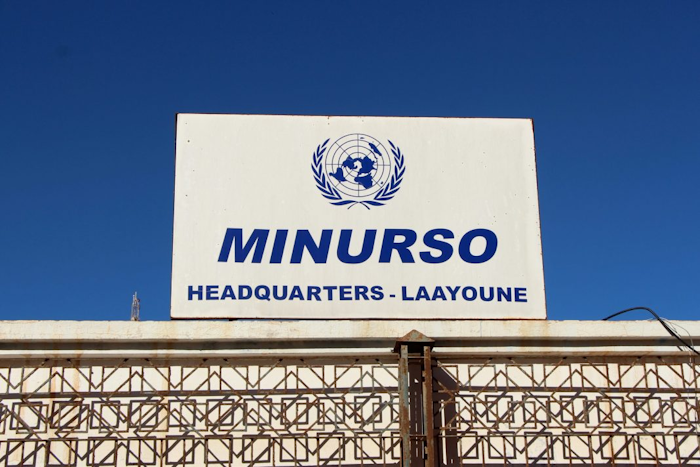
In parallel, the US, which is the penholder on Western Sahara, has also intensified engagement with interlocutors. In late July, Boulos visited Algiers and met with several senior Algerian officials, including President Abdelmadjid Tebboune and Foreign Minister Attaf. In mid-August, a delegation of US diplomats and military officials visited MINURSO headquarters in Laayoune, the largest city in Western Sahara. The delegation reportedly met with the Special Representative of the Secretary-General for Western Sahara and Head of MINURSO, Alexander Ivanko, and the mission’s Force Commander, Lieutenant General Fakhrul Ahsan. According to local media reports, discussions centred on the implementation of the mission’s mandate, operational challenges on the ground, and the potential implications of budget reductions on the mission’s composition.
Later in August, a bipartisan US congressional delegation visited Rabat, where they met with senior Moroccan officials, including Foreign Minister Bourita. Among other issues, the discussions centred on the question of Western Sahara. Leading the delegation, Congressman Mike Lawler, chair of the House Foreign Affairs Subcommittee on the Middle East and North Africa, described Morocco’s Autonomy Plan as a pragmatic framework for achieving lasting “safety and progress”.
The situation on the ground remains tense, characterised by ongoing low-intensity hostilities between Morocco and the Polisario Front. On 4 June, a drone strike reportedly carried out by the Moroccan army hit an Algerian-registered truck near the town of Bir Lahlou in north-eastern Western Sahara, killing three people. Another drone strike by the Moroccan army on 19 June targeted a vehicle reportedly belonging to the Polisario Front near Mijek town.
On 27 June, four rockets struck the city of Smara, in Moroccan-administered territory of Western Sahara, including one that landed 200 metres from the MINURSO team site. The rockets were launched from an area located around 40 kilometres east of the berm. (The berm, an approximately 1,700-mile-long earthen wall, separates the Moroccan-administered part of Western Sahara from territory controlled by the Polisario Front.) The Polisario Front claimed responsibility for the attack. Later that day, the Moroccan army reportedly carried out a drone strike targeting individuals linked to the Polisario Front and alleged to have been responsible for the rocket fire on Smara.
Key Issues and Options
An immediate issue for the Council is to renew the mandate of MINURSO and consider what changes to the mission’s mandate, if any, are necessary.
The underlying issue remains how to facilitate a viable and lasting resolution to the long-standing deadlock over the status of Western Sahara.
Two fundamentally diverging positions have made a resolution to the conflict difficult. On the one hand, the Polisario Front’s demand for the Sahrawi people’s right to self-determination, which has been recognised by the International Court of Justice in its 16 October 1975 advisory opinion and supported by several member states. Numerous UN General Assembly resolutions, such as resolution A/RES/34/37, have affirmed the “inalienable right of the people of Western Sahara” to self-determination and independence. The Council has also called for a “just, lasting, and mutually acceptable political solution which will provide for the self-determination of the people of Western Sahara”. On the other hand, Morocco claims sovereignty over the territory, and its Autonomy Plan has received support from an increasing number of member states in recent years. In 2007, the Council adopted resolution 1754, which, in its preambular paragraphs, took note of Morocco’s proposal and welcomed Morocco’s efforts as serious and credible to move the process forward towards resolution.
Significant obstacles remain in the peace process. Hostilities have persisted at a low to medium intensity, falling short of large-scale confrontation. Moreover, Morocco controls over three-quarters of the Western Sahara territory and has made substantial investments in the region, including a $1.2 billion port project in Dakhla. In addition, settlers of Moroccan origin account for nearly two-thirds of the approximately half-million residents of Western Sahara.
MINURSO’s limited ability to implement its mandate is also an issue. This is due to the protracted nature of the conflict and the intransigence of the parties. The lack of progress perpetuates instability and heightens the risk of renewed hostilities. At the same time, Council members must navigate competing interests of key stakeholders, which continue to shape the Council’s deliberations on this file.
Also, an important issue for the Council is how, amid severe financial constraints and the broader reform process under the UN80 initiative, to preserve MINURSO’s operational effectiveness and ensure that the mission can continue to address evolving dynamics on the ground and advance the implementation of its mandate.
One option for Council members could be to hold a stake-in ahead of consultations in October to express support for de Mistura’s efforts and urge the relevant parties to resume negotiations, show flexibility in their engagement with the Personal Envoy and each other, and expand on their positions, in the hopes of ending the current impasse and achieving progress towards a political solution.
Council Dynamics
Council members differ starkly in their national positions on Western Sahara. The US, the penholder on Western Sahara, recognised Morocco’s sovereignty over the region in December 2020 during the first administration of President Donald Trump and has committed to opening a consulate in the disputed territory. France supports the Moroccan autonomy plan as the “only basis” for achieving a political solution, while the UK recently adjusted its position to describe the autonomy proposal as the “most credible, viable and pragmatic basis for a lasting resolution of the dispute”. Countries such as France and the US have also sought to make significant investments in projects in Western Sahara. Denmark views Morocco’s Autonomy Plan as “a good basis for an agreed solution between all parties”, while Greece considers it a “serious and credible” approach.
The African members of the Council do not have a common position. Sierra Leone recognises Moroccan sovereignty over Western Sahara. Algeria strongly supports the Sahrawis’ right to self-determination and maintains diplomatic relations with the Sahrawi Arab Democratic Republic (SADR). Guyana, which is a member of the “A3 plus one” grouping, withdrew its recognition of the SADR, dating from 1979, in November 2020. Somalia maintains cordial relations with both Algeria and Morocco but does not recognise the SADR nor endorse Moroccan sovereignty over Western Sahara.
In November 2024, Panama suspended diplomatic relations with SADR. During a visit to Morocco in June, Panama’s Foreign Minister Javier Martínez-Acha supported Morocco’s proposal as “the most serious, credible, and realistic basis” for a lasting solution.
The difficult dynamics surrounding the file led to contentious negotiations on resolution 2756, which renewed the MINURSO mandate last year. Algeria argued that its views were “deliberately ignored” by the penholder. Ahead of the vote on the draft resolution, authored by the US, Algeria tabled two draft amendments to the text, but they did not garner the requisite number of votes to be adopted. During the vote on the draft resolution, Russia and then-Council member Mozambique abstained, while Algeria chose not to participate. (For more information, see our 31 October 2024 What’s in Blue story.)
Source : Security Council report
