


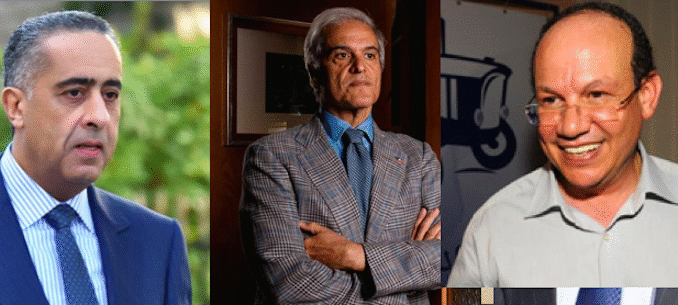
Tags: Morocco, DGED, DGST, Abdellatif El Hammouchi, Fouad Ali El Himma, Barlamane,
The article by journalist and former political prisoner Souleiman Raissouni on the attacks launched by Barlaman.com against the symbols of Fouad Ali El Himma’s wing reveals an unprecedented event in the history of the Moroccan regime: a security apparatus openly targeting palace figures it was supposed to protect. Raissouni underlined this phenomenon as a breach of the traditional behavior of intelligence services and their media mouthpieces, which usually targeted dissidents and activists while steering clear of the king’s advisors and powerful ministers.
But while Raissouni focused on describing these unusual incidents, a deeper reading imposes itself. What is happening today is not a mere personal quarrel between Hammouchi and El Himma, but rather a reflection of the structural fragility of the ruling system. The Makhzen regime, which always sought to keep its internal disputes hidden, is now exposing its cracks to public opinion. This alone is a sign that Morocco has entered a new phase, where state apparatuses openly compete for power—even if it means tarnishing the monarchy’s image itself.
The king’s illness and prolonged absence form the main backdrop of this scene. In authoritarian systems, the ruler’s presence guarantees a balance among competing factions. Once absent, the vacuum tempts security agencies to expand, settle scores, and even use the media as a weapon in their turf wars. Abdellatif Hammouchi, who rose to prominence thanks to his intelligence services offered to the West in the so-called “war on terror,” is no longer content with being a subordinate. He now seeks to establish himself as an independent player within the palace—even at the cost of attacking his former “masters” and benefactors.
This is exactly what Prince Hicham Alaoui meant when he spoke about the “stupidity and corruption of the security services,” which have moved beyond blackmailing the people and dissidents to blackmailing one another and even attempting to impose their tutelage on the palace itself. The real danger here is that the regime can no longer even protect its internal image. The very same tools that destroyed the lives of dissidents—defamation, fabrication, and slander—are now being used within the ruling elite, exposing that the Makhzen is no longer the solid block it once pretended to be.
The result is that Morocco is now experiencing what can only be described as authoritarian thuggery. Security agencies treat the state as spoils to be divided, exchanging blows openly, while the Moroccan people pay the price twice over. They paid when these methods were used against them, and they pay again today as they watch the fate of the entire nation being held hostage to the calculations of rival gangs concerned only with expanding their share of power and wealth.
What Souleiman Raissouni began as documentation of an unprecedented phenomenon thus reveals a deeper truth: Morocco is no longer facing only a monarchical-Makhzenian dictatorship that crushes its opponents, but also the risk of internal collapse of a system that has lost its compass and begun to devour itself from within. And this is the most dangerous message that could emanate from the top of the state, both domestically and internationally: Morocco is no longer governed—it is contested.
May God have mercy on the Moroccan people, and may He show no mercy to those who oppress, corrupt, and gamble with their fate.
Qandyl Mohamed – Blogger, Human Rights and Political Activist, Independent Moroccan Voice