
Tags : South Africa, Western Sahara, Jacob Zuma, MKP, Morocco, ANC,
Qandyl Mohamed – Moroccan Blogger, Political and Human Rights Activist
Date: July 21, 2025
Introduction :
Amid the long-standing conflict between Morocco and the Polisario Front over Western Sahara—recognized by the international community as a non-self-governing territory according to UN resolutions—a new wave of political outrage erupted in South Africa following former President Jacob Zuma’s visit to Morocco and his explicit support for the « autonomy plan under Moroccan sovereignty. »
The response came swiftly and fiercely from the ruling African National Congress (ANC), reigniting the geopolitical dimensions of the issue and highlighting its position within the broader post-colonial divisions of Africa.
The Core of the Dispute : Liberation Principles vs Opportunistic Alignment
Since the era of Nelson Mandela, South Africa has taken a principled and consistent position in favor of the Sahrawi people’s right to self-determination, in line with the values forged in its own liberation struggle against apartheid. This commitment has been demonstrated in unwavering support for the Polisario Front and outright rejection of any attempt to legitimize Morocco’s occupation of Western Sahara.
However, Zuma’s July 2025 visit to Morocco, where he attended a meeting with Moroccan officials under the display of South African national flags, was viewed as a provocative symbolic act that triggered a strong backlash from the ANC. The party accused Zuma of siding with the occupation narrative and attempting to lend false legitimacy to Morocco’s fait accompli policies.
ANC Statement : Clear Rejection and Affirmation of Principle
In its official statement, the ANC emphasized that Zuma’s actions do not represent the South African state, and instead contradict both its constitution and its foreign policy principles, calling on Morocco to issue a formal apology for misusing South Africa’s national symbols in a propaganda context.
This position is not merely political, but carries legal and diplomatic weight, stating clearly that:
South Africa does not recognize Morocco’s sovereignty over Western Sahara.
Any attempt to promote the contrary constitutes “misleading international public opinion” and falls under “neo-colonial propaganda.”
Dimensions of the Conflict : Between International Legitimacy and Checkbook Diplomacy
The Moroccan regime’s moves—whether through courting African political figures or promoting the “autonomy plan”—are part of a calculated strategy aimed at thwarting the Sahrawi people’s right to self-determination, a right explicitly guaranteed by UN resolutions and reinforced by the International Court of Justice ruling in 1975.
However, Morocco’s growing influence among certain states or parties does not reflect any legitimate legal or moral shift, but is the product of what may be termed “deal-based diplomacy,” utilizing tools such as:
– Conditional investments
– Development aid tied to political alignment
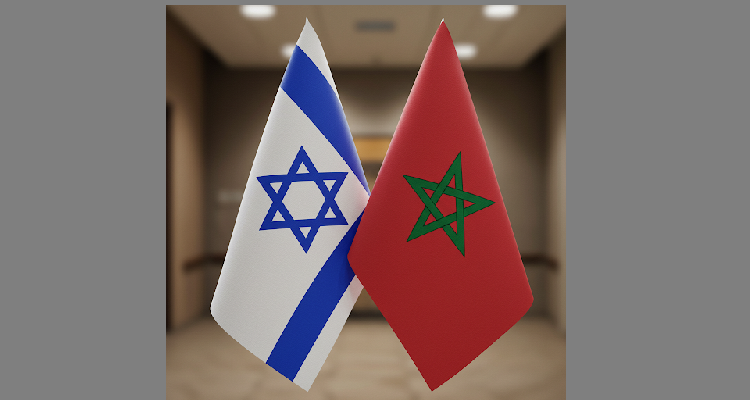
– Pressure through global partners such as France and Israel
Yet South Africa’s stance affirms that international legitimacy is not for sale, and the voices of freedom-loving peoples cannot be silenced by wealth or political pressure.
Reactions : Internal Division, but an Unequal One
Within South Africa, reactions have been sharply divided:
The EFF (Economic Freedom Fighters) labeled Zuma a “traitor”, arguing that his alliance with Morocco disgraces South Africa’s liberation heritage.
The ANC called the move a “diplomatic disgrace,” asserting that Zuma betrayed the very legacy he once carried as a national leader.
Zuma’s own party, the MK Party, tried to justify the move as an “independent initiative”, yet the public broadly viewed it as blatant normalization with an occupying regime.
Key Takeaways :
– South Africa renews its unwavering support for the Sahrawi people, reaffirming that rights are not lost through time or shady alliances.
– The Moroccan regime continues to leverage money and influence to buy political support, a trend that must be countered by exposing the truth, not by remaining silent.
– African and global populations still resonate with the spirit of liberation, and the ANC’s position is a model to be emulated across Africa and the Arab world.
– The right to self-determination is not a political option, but a legal and moral obligation. The international community—especially the UN and African Union—must act to enforce it.
Conclusion :
Between Zuma’s normalization and Ramaphosa’s opposition, principles triumph over interests. Western Sahara remains one of Africa’s last remaining struggles for true decolonization.
Our support for the Sahrawi people’s right to self-determination is not driven by allegiance to any faction—it is a commitment to justice, international law, and the voice of the oppressed.
🇿🇦 South African Media Sources :
IOL – “Zuma’s visit to Morocco described as ‘betrayal’ of the Western Sahara”
https://iol.co.za/news/politics/2025-07-21-zumas-visit-to-morocco-described-as-betrayal-of-the-western-sahara
News24 – “Zuma’s MK Party sparks ANC fury over Western Sahara policy shift, SA flag use”
https://www.news24.com/politics/zumas-mk-party-sparks-anc-fury-over-western-sahara-policy-shift-sa-flag-use-20250719-1023
News24 – “‘Zuma is no messiah; he’s a sellout of note’: Mbalula slams MK Party’s Morocco stance”
https://www.news24.com/politics/zuma-is-no-messiah-hes-a-sellout-of-note-mbalula-slams-mk-partys-morocco-stance-20250720-0810
TimesLIVE – “Malema slams ‘sellout’ Zuma’s Morocco visit”
https://www.timeslive.co.za/politics/2025-07-21-malema-slams-sellout-zumas-morocco-visit
Central News – “ANC Accuses Zuma of Undermining SA Sovereignty After Morocco Endorsement”
https://centralnews.co.za/anc-accuses-zuma-of-undermining-sa-sovereignty-after-morocco-endorsement
Mohamed Qandyl (Facebook)
#Morocco #WesternSahara #SouthAfrica #JacobZuma #ANC #MKP
Leave a Reply